How SINOLIFT Customized a Semi-Electric Air Shaft Roll Tilter for Safer Roll Handling
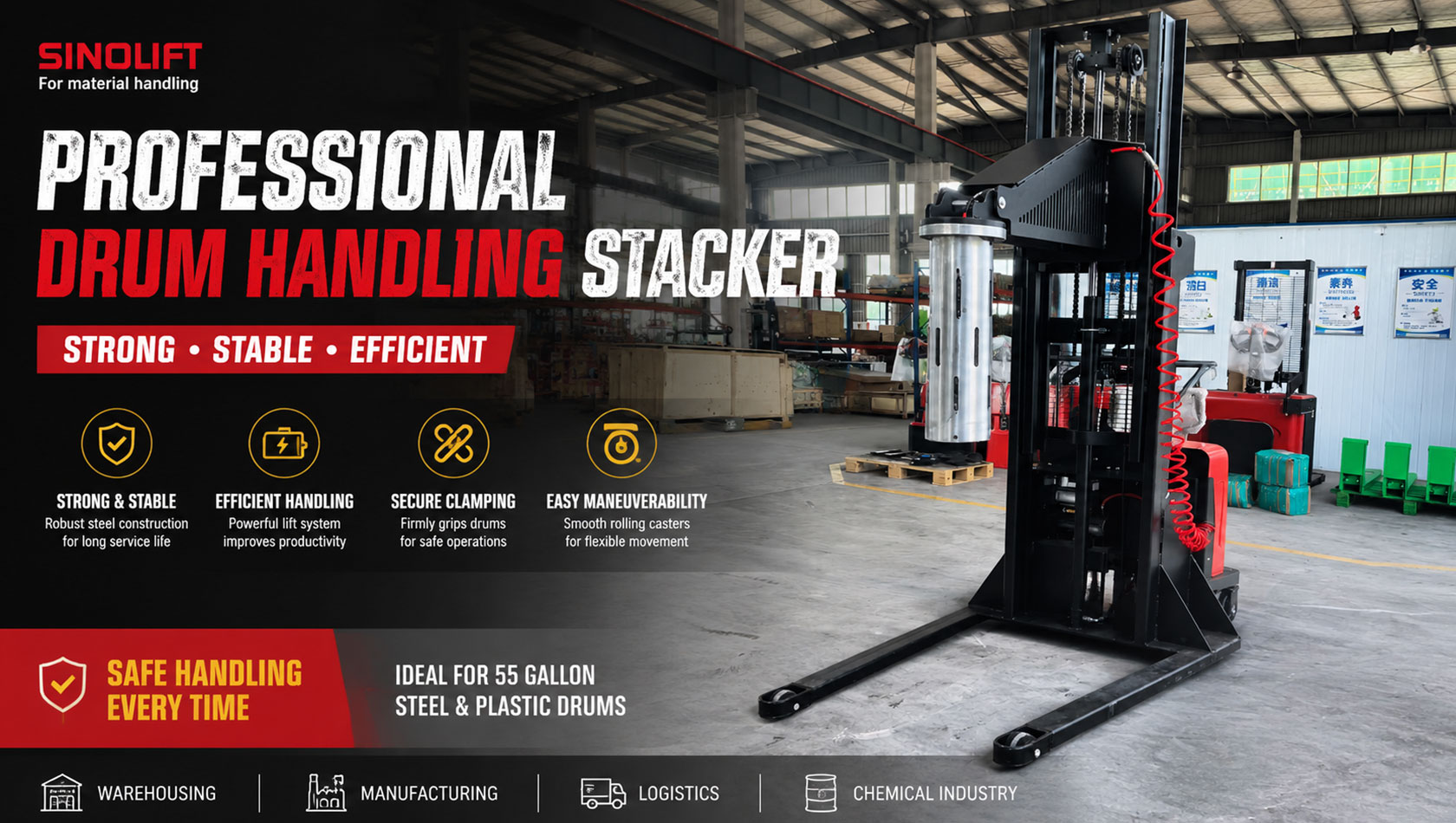
Industrial roll handling is rarely a simple transport task. In flexible packaging, film converting, printing, label manufacturing, paper processing, textile production, coating, and laminating workshops, operators often need to lift a roll, support it through the core, rotate it to the correct working angle, and align it with production equipment inside a limited floor area.
Traditional equipment such as forklifts, manual trolleys, slings, and external clamps can move a roll, but they often cannot solve the complete workflow. A forklift may be too large for narrow production areas, while manual rotation can be unsafe for heavy rolls and external clamps may create pressure marks on sensitive surfaces.
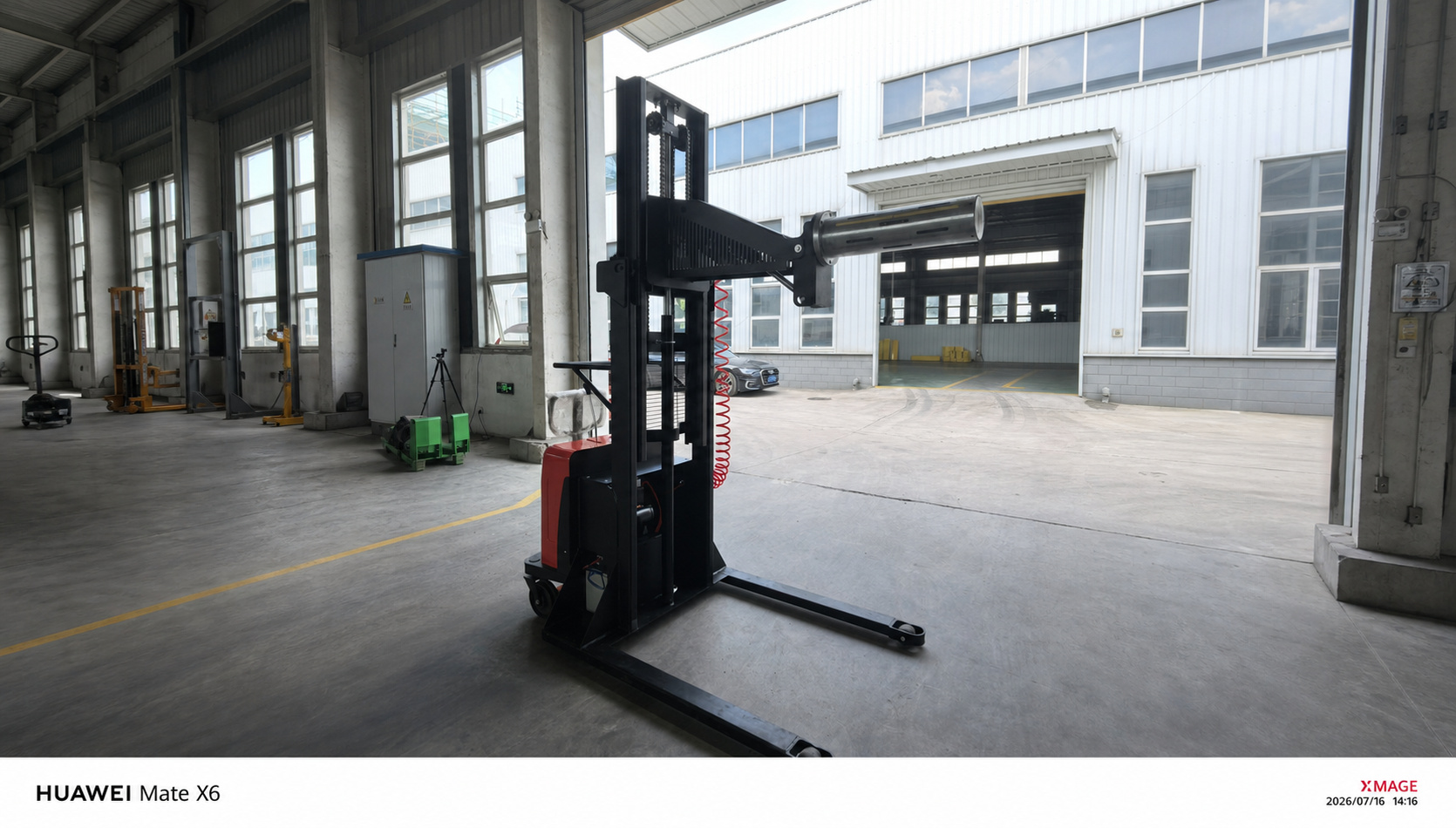
To solve this handling challenge, SINOLIFT developed a customized semi-electric air shaft roll tilter. The equipment combines a compact stacker-style base, semi-electric lifting assistance, a front-mounted air shaft, a rotating head assembly, and a vertical mast structure. Its purpose is to help operators lift, support, rotate, and position roll materials with better control.
Customer Challenge: Roll Handling Required More Than Basic Lifting
Many production rolls are heavy, round, and surface-sensitive. A roll may look stable when stored horizontally, but it becomes difficult to control once it needs to be lifted, turned, or aligned with a machine shaft. The handling problem becomes more complex when the roll has a large diameter, long width, or delicate outer material.
In daily production, customers often face three practical problems.
First, roll positioning must be accurate. Production machines usually require rolls to be loaded at a specific height and direction. If the roll core does not align with the machine shaft, operators may need repeated adjustments, which wastes time and increases handling risk.
Second, the roll surface must be protected. Materials such as plastic film, aluminum foil, printed rolls, laminated materials, labels, and coated substrates can be damaged by external pressure. A mark or deformation on the outer layer can lead to material waste, production delay, or quality complaints.
Third, workshop space is often limited. Roll-handling operations usually happen near slitting machines, printing machines, laminating lines, unwinding equipment, or packing areas. Large forklifts are not always efficient in these spaces. Operators need equipment that can work close to the production line and support controlled positioning.
Customized Solution: Semi-Electric Air Shaft Roll Tilter
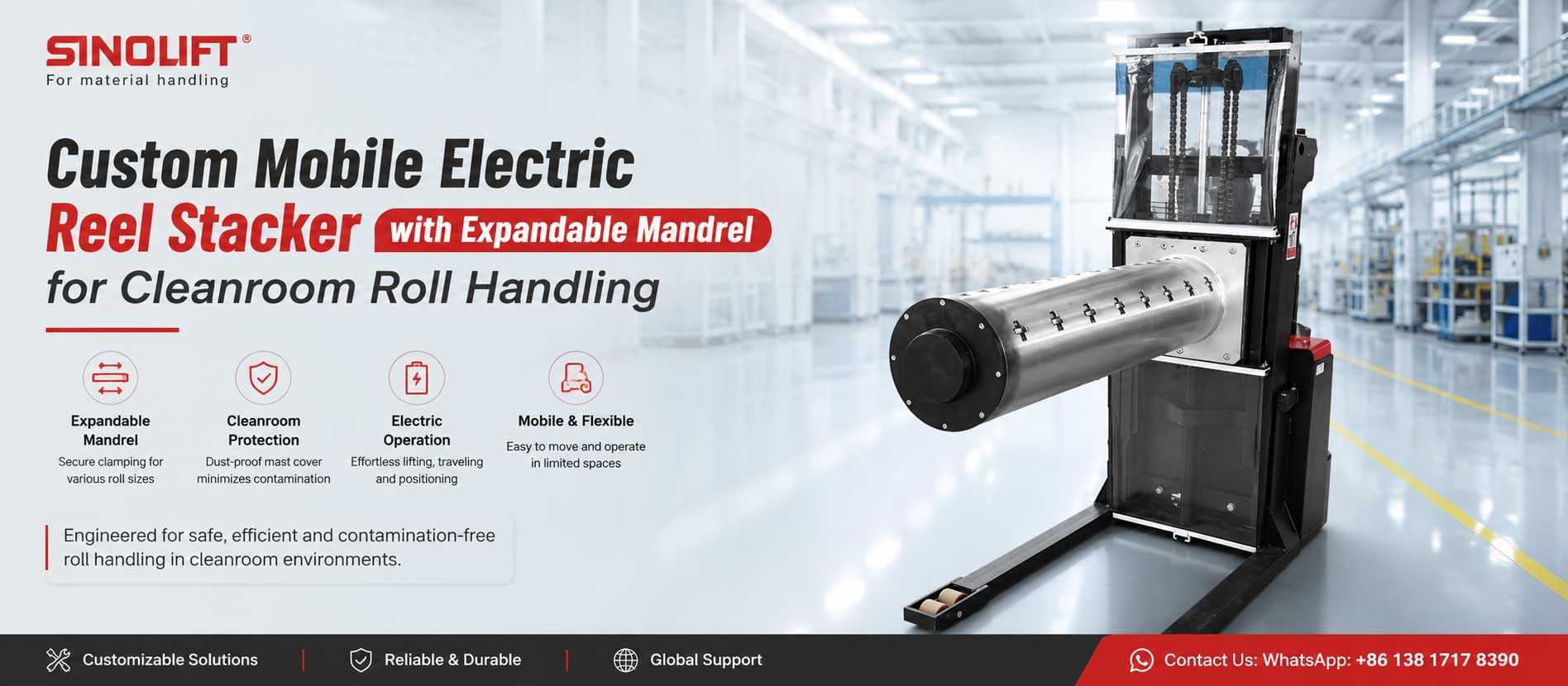
Based on these requirements, SINOLIFT designed a non-standard roll handling solution around air shaft core support. Instead of clamping the roll from the outside, the equipment supports the roll through its inner core. This makes it suitable for roll materials where surface protection and accurate alignment are important.
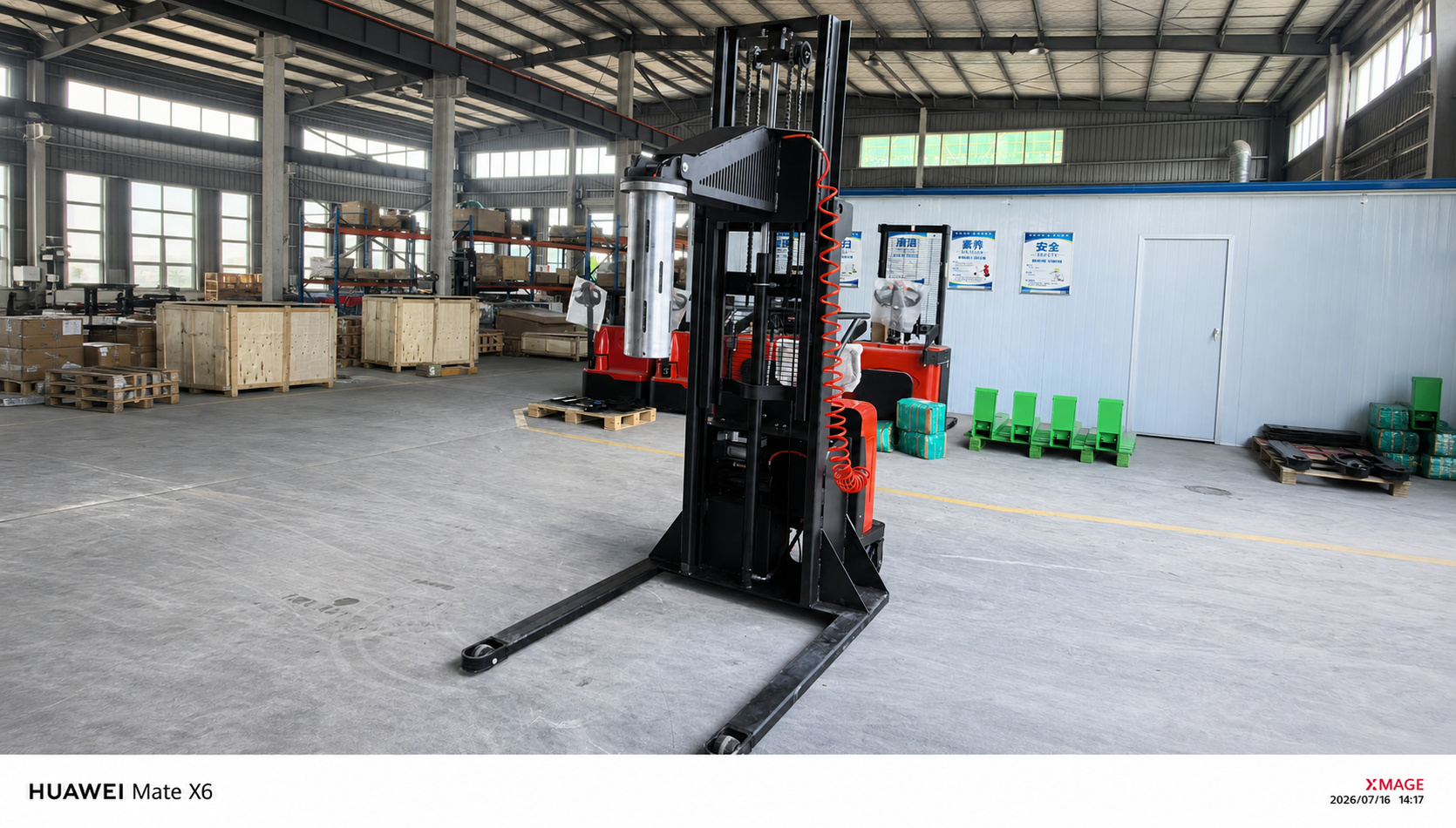
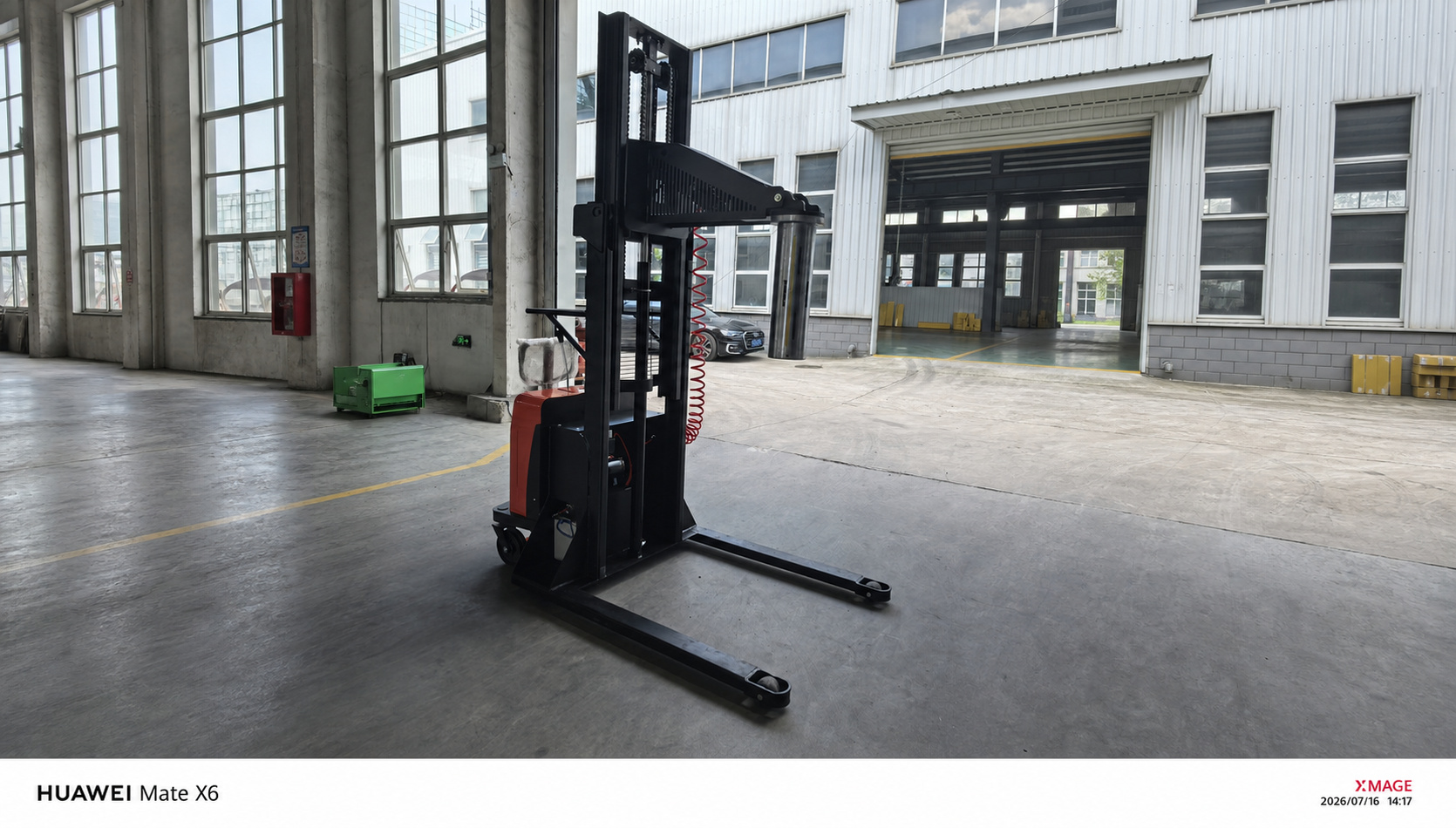
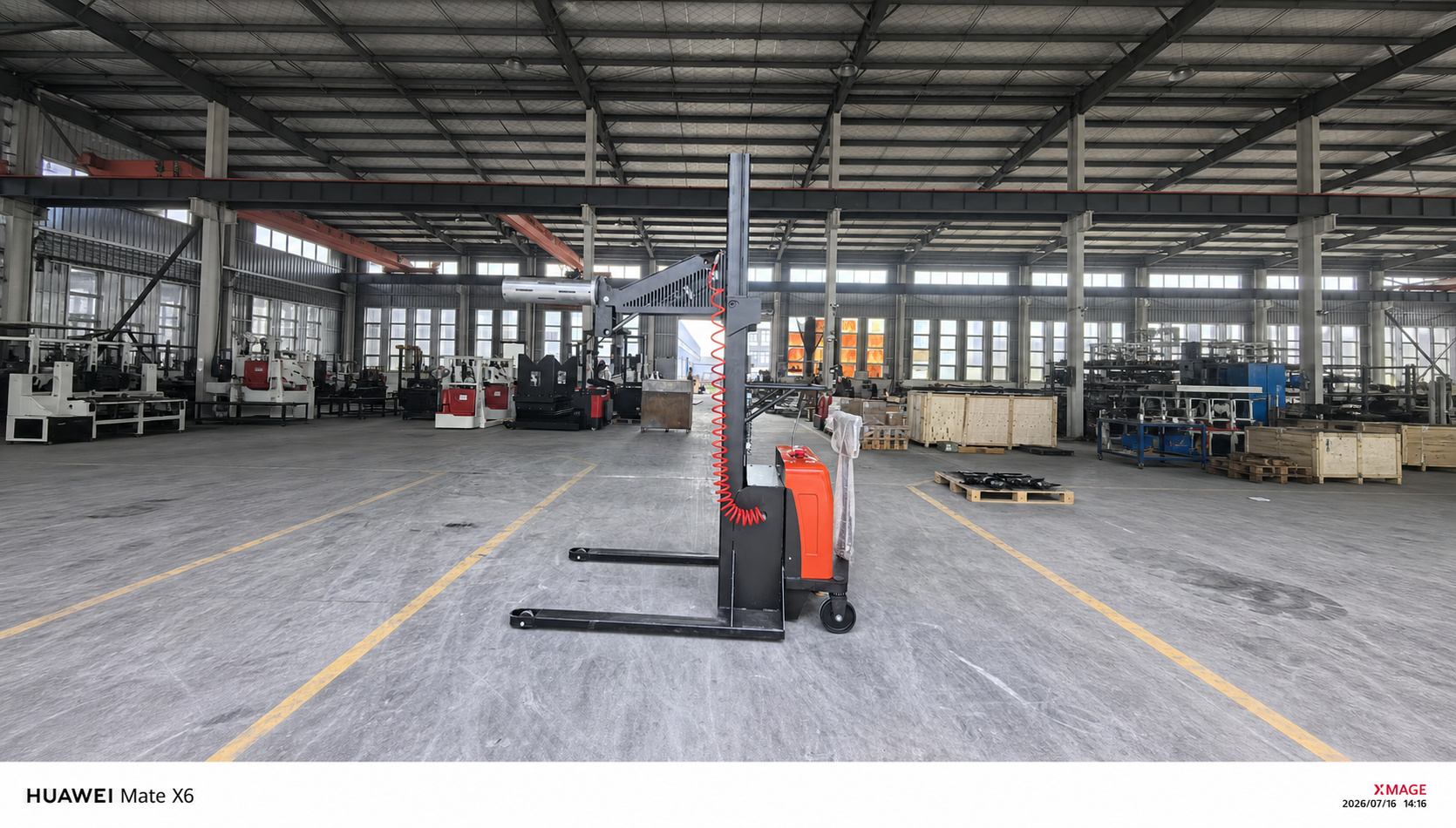
The customized structure includes a vertical lifting mast, chain lifting mechanism, front-mounted air shaft, rotating head assembly, long support legs, powered driving base, and wired control handle. The shipment photos show a compact black mast frame, red rear power section, long forward legs, horizontal silver air shaft, and red coiled air line near the mast.
The design information indicates that the equipment was customized around the customer’s roll-handling requirements, including approximately 1000 kg rated load capacity, 800 mm roll diameter compatibility, and a 1.5 m core shaft configuration.
How the Air Shaft Roll Tilter Works
The process begins when the operator positions the machine in front of the roll. The front-mounted air shaft enters the roll core. After inflation, the shaft expands inside the core and creates internal grip. This connects the roll to the lifting system without applying pressure to the outer surface.
Once the roll is secured, the semi-electric lifting system raises the roll through the mast and chain structure. This allows the operator to adjust the roll height according to the loading position, storage rack, cart, or machine shaft. Compared with manual lifting or improvised handling, this creates a more controlled vertical movement.
After lifting, the rotating head assembly allows the roll direction to be adjusted. This is important when the roll must be turned from storage orientation to feeding orientation. Instead of requiring manual rotation or a second handling step, the operator can lift, rotate, and position the roll within one workflow.
The wired control handle gives the operator close control during positioning, while the long front support legs help support the load in front of the mast.
Why Use Air Shaft Support Instead of External Clamping?
The gripping method is one of the most important decisions in roll handling. External clamps apply pressure from the outside. For sensitive materials, this can create surface marks, edge deformation, or uneven pressure.
An air shaft works differently. It supports the roll from the inner core. When inflated, the shaft expands and grips the core from inside. This reduces direct contact with the outer roll surface and provides a cleaner holding point for lifting and rotation.
This method is especially useful for plastic film rolls, printed rolls, label rolls, laminated rolls, aluminum foil, paper rolls, textile rolls, and nonwoven materials.
Application Industries
Flexible packaging manufacturers frequently handle plastic film, laminated film, barrier film, and printed packaging rolls. A customized air shaft roll tilter helps operators support the roll through the core and position it closer to the production machine.
Film converting lines require accurate roll loading and unloading. If the roll is misaligned, operators may spend extra time adjusting the material before production can continue. The semi-electric air shaft tilter helps lift and rotate the roll to match the required loading direction.
Printing and label production often involves frequent roll changes. Core-supported lifting can reduce manual adjustment and help protect printed or coated surfaces.
Paper, textile, and nonwoven rolls can be difficult to rotate manually, even when their weight is moderate. The round shape makes uncontrolled movement a real concern. By supporting the roll through the core, the equipment gives operators a more stable handling method.
Coating and laminating processes often require roll materials to be positioned accurately near feeding or rewinding sections, especially when roll height and orientation must be adjusted before production.
Traditional Roll Handling Compared with SINOLIFT Air Shaft Tilter
Forklifts are useful for long-distance transport, but they are not always suitable for precise roll alignment near production equipment.
Manual trolleys are simple, but they cannot easily lift, rotate, or align heavy rolls. They may still require operators to push, pull, or tilt the roll by hand.
External clamps can hold some rolls, but they may damage sensitive surfaces or create uneven pressure. For high-value roll materials, this can become a quality risk.
Sling lifting can handle heavy rolls, but it requires additional equipment, overhead space, and rigging time.
The SINOLIFT semi-electric air shaft roll tilter provides a more integrated method. It combines core support, lifting, rotation, and compact movement in one customized machine.
Professional Buying Guide
Before selecting roll handling equipment, buyers should confirm maximum roll weight, roll outer diameter, roll width, core diameter, and core material. The air shaft must match the roll core size and provide enough grip for the application.
The required lifting height should also be measured carefully. Buyers should check machine shaft height, storage height, cart height, and loading position.
Rotation requirements should be defined early. Some applications only require transportation and lifting. Others need 90-degree rotation, 180-degree rotation, or a specific machine-feeding orientation. The rotation requirement directly affects the rotating head and attachment design.
The working environment matters as well. Buyers should consider aisle width, floor condition, turning space, cleanliness requirements, and whether the equipment must operate close to production machines.
Frequently Asked Questions
01.What is a semi-electric air shaft roll tilter?
A semi-electric air shaft roll tilter is specialized handling equipment used to lift, move, and rotate industrial rolls by gripping the roll through its inner core.
02.Why use an air shaft instead of an external clamp?
An air shaft supports the roll from inside the core, reducing pressure on the outer surface and helping protect sensitive roll materials.
03.Which industries use this type of equipment?
Common industries include flexible packaging, film converting, printing, labels, paper processing, textiles, nonwovens, coating, and laminating.
04.Can this equipment be customized?
Yes. SINOLIFT can customize shaft diameter, load capacity, lifting height, rotation function, support leg length, and overall machine dimensions according to the customer’s roll and production requirements.
Conclusion
For manufacturers handling high-value roll materials, efficient handling is not only about moving a load. It is about protecting the material, improving production flow, reducing manual effort, and helping operators position rolls accurately. The SINOLIFT customized semi-electric air shaft roll tilter provides an integrated solution for applications where standard forklifts, carts, clamps, or slings cannot meet the complete workflow.
To design the right roll handling solution, customers should provide roll weight, roll diameter, roll width, core size, lifting height, rotation requirement, machine loading direction, and working environment. SINOLIFT engineers can then develop a customized handling solution matched to the production process.
Website: www.sinoliftcorp.com
Email: market@sinolift.com
WhatsApp: +86 138 1717 8390
How to Select a Stainless Steel Semi-Electric Stacker for Round Loads: CTD1000SR Application Guide
Sinolift Custom Cleanroom Reel Handling Solution Based on the ND95 Mobile Electric Reel Stacker
Related Article