Customized Roll Handling Solutions for the Lithium Battery Industry
As global demand for electric vehicles (EVs) and energy-storage systems accelerates, the lithium-ion battery sector is expanding faster than ever. This growth has brought new complexity to the factory floor — where electrode rolls, separator films, and foil materials must be handled with exceptional precision and care. Traditional manual or hydraulic lifting methods are no longer adequate for the cleanliness, safety, and efficiency standards that modern battery production requires.
In this environment, custom-engineered roll handling solutions have become indispensable. From precision electric lifters to automated stacking systems, the next generation of equipment is designed specifically to meet the demanding conditions of lithium battery manufacturing lines.


1. Why Standard Lifting Equipment Falls Short
Lithium battery factories operate under strict environmental and process constraints.
Cleanroom compliance: Even small amounts of dust, oil, or particles can compromise cell quality.
Material sensitivity: Copper and aluminum foils are extremely thin — any uneven pressure may wrinkle or tear them.
High-frequency operation: Continuous loading and unloading cycles place heavy demands on durability and operator fatigue.
Conventional forklifts or hydraulic stackers, often designed for paper or film rolls, can introduce contamination risks or lack the micro-level control needed for delicate electrode rolls. As a result, many manufacturers are turning to specialized electric reel lifters and rotators that combine precision engineering with clean-energy operation.
2. Tailoring Roll Handling to the Lithium Process
Every stage of the lithium battery value chain — from electrode coating to cell assembly — poses unique material-handling challenges. Let’s look at three critical examples where customization makes all the difference.
a. Electrode Coating & Slitting Lines
Electrode rolls can weigh several hundred kilograms and must be transferred smoothly between coating, drying, and slitting machines.
Custom lifters feature:
Precision mandrel gripping systems to avoid surface contact with the active layer.
Automatic pressure-adjusting clamps that adapt to roll diameter and density.
Rotating arms with 90°-180° tilt for easy vertical-to-horizontal transitions.
b. Cell Winding and Lamination
At this stage, precision alignment determines product yield. Customized roll lifters with servo-controlled lifting enable micrometer-level positioning, ensuring perfect feed into winding machines without offset or deformation.
c. Finished Roll Packaging
After slitting, the separator and electrode rolls must be packed in clean, antistatic conditions. Lightweight, stainless-steel or aluminum-alloy lifters provide both hygiene and corrosion resistance while maintaining structural strength.
3. Intelligent Electric Design for High-Tech Manufacturing
Today’s lithium battery lines demand not just mechanical precision but also digital intelligence. Advanced electric lifters now incorporate:
Touchscreen interfaces with programmable lifting heights and load memory.
Load sensors that prevent over-clamping or imbalance.
IoT connectivity for real-time performance monitoring and preventive maintenance.
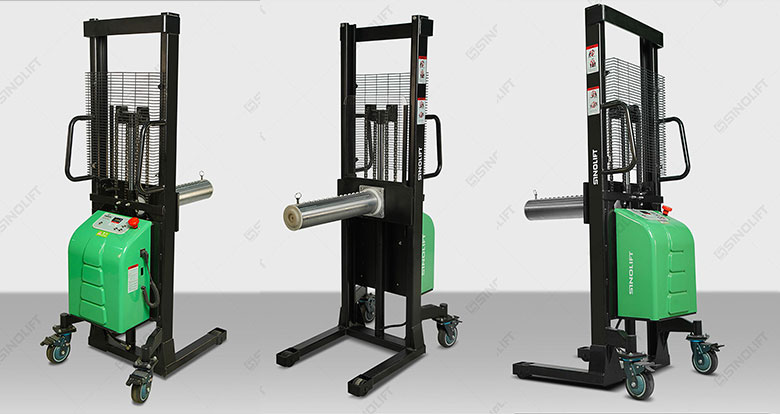
For example, Sinolift’s intelligent single-arm mandrel stacker offers proportional electronic control that adjusts lifting speed and torque automatically based on load weight. The result is seamless integration into smart factory systems, reducing downtime and improving traceability across production stages.

4. Cleanroom-Ready Materials and Safety Standards
In the lithium industry, cleanliness is more than a preference — it’s a requirement. Customized roll lifters are therefore built with:
Oil-free electric drives to eliminate hydraulic contamination.
Enclosed dust-proof covers made from transparent polycarbonate for easy inspection.
Antistatic coatings and stainless hardware to meet cleanroom ISO standards.
Additionally, ergonomic design features such as low-noise motors, compact chassis, and one-hand joystick control improve operator comfort and minimize the risk of repetitive strain injuries — a key consideration in 24-hour production environments.

5. Modular Engineering for Maximum Flexibility
No two battery factories are the same. Production layouts, roll sizes, and workflow requirements vary widely. That’s why the future of roll handling lies in modular engineering — equipment that can be easily configured with different attachments and functions, including:
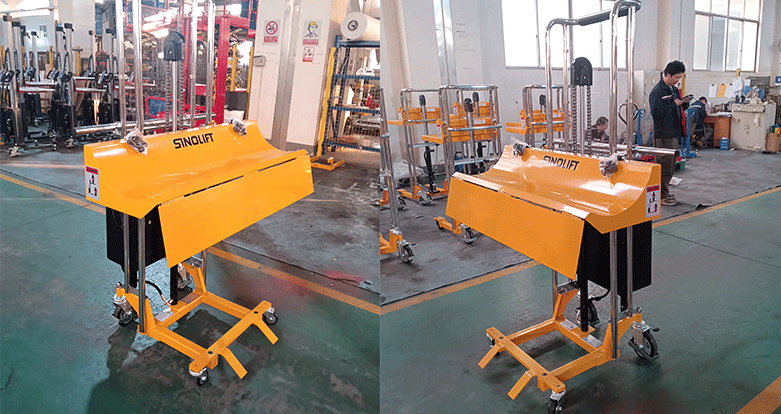
V-shaped cradles for paper-like separator rolls
Core-gripping mandrels for electrode foil rolls
Dual-spindle or cantilever arms for restricted spaces
Adjustable base widths and lifting heights for multiple machines

This modularity allows manufacturers to deploy a single platform across multiple lines, reducing total cost of ownership and simplifying maintenance.


Conclusion: Precision, Safety, and Sustainability
The lithium battery industry is reshaping the future of mobility and energy — and customized roll handling equipment plays a vital role in that transformation.
By combining intelligent control, clean design, ergonomic safety, and energy efficiency, the next generation of lifters ensures that sensitive electrode materials are handled with the highest precision.
As factories scale up for global EV and storage demand, investing in smart, customized, and sustainable roll handling systems is not just an operational choice — it’s a strategic step toward safer, cleaner, and more automated battery manufacturing.
Sinolift offers customized services to meet various customer requirements. If you are interested in our products, feel free to contact us for more information. Visit our website at //www.sinoliftcorp.com, or reach us via email at market@sinolift.com or WhatsApp: +8613817178390
The latest customer's customized Sinolift PFR manual hydraulic roll lifter