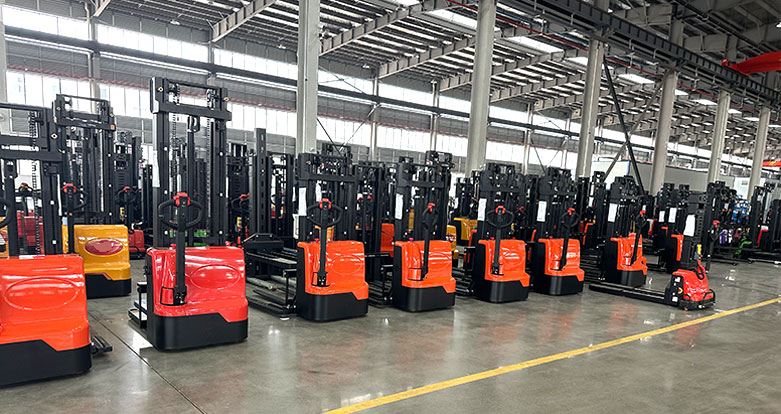
Self Loading Stacker: How to Choose the Right Model for Warehouse and Delivery Efficiency
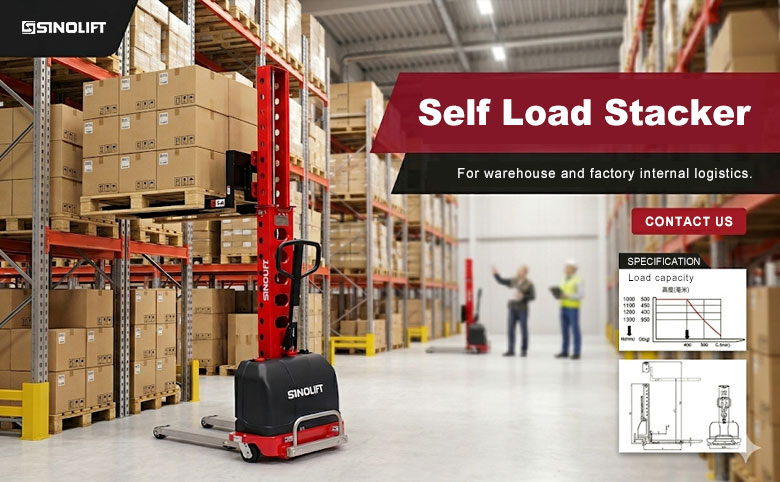
For businesses dealing with multi-point delivery, limited warehouse space, or labor shortages, a self loading stacker helps bridge the gap between transport and pallet handling, improving both efficiency and operational flexibility.
What is a Self Loading Stacker?
A self loading stacker is a compact material handling solution designed to lift pallets and load itself into trucks or vans, allowing goods to be transported and unloaded without additional equipment.
Unlike traditional pallet stackers, it combines:
- Lifting function
- Mobility
- Vehicle loading capability
This makes it particularly suitable for last-mile delivery and decentralized logistics operations.

Key Applications
1. Warehouse Operations
In small and medium-sized warehouses, forklifts are not always practical due to cost or space constraints. A self loading stacker allows operators to:
- Move pallets between storage and dispatch areas
- Load goods directly into delivery vehicles
- Reduce reliance on forklifts for light-duty tasks
This is especially useful in narrow aisles or flexible storage environments.
2. Manufacturing Facilities
In production settings, materials need to move frequently between:
- Production lines
- Temporary storage
- Outbound shipping areas
A self loading stacker helps maintain workflow by:
- Reducing waiting time for forklifts
- Supporting continuous pallet movement
- Handling medium-weight goods efficiently
It acts as a cost-effective alternative for internal logistics.
3. Retail & Logistics Distribution
For retail delivery and e-commerce distribution, the biggest challenge is often no unloading infrastructure at the destination.
With a self loading stacker:
- Drivers can load goods independently
- No need for forklifts at delivery points
- Faster turnaround for multi-stop delivery routes
This is ideal for:
- Supermarket distribution
- Urban delivery routes
- Convenience store replenishment
How to Choose the Right Self Loading Stacker
Choosing the right model depends on your actual working conditions. Based on Sinolift product lines, here are practical recommendations:
1. Load Capacity
Start with your typical pallet weight:
- Light-duty (≤500 kg)
Recommended: SDYG Self Loading Stacker
Best for delivery and light warehouse tasks - Medium to heavy-duty (1000–1500 kg)
Recommended: SES Series Self Loading Stacker
Suitable for warehouse and industrial handling
👉 Tip: Avoid oversizing. Selecting based on real load improves efficiency and reduces cost.

2. Lifting Height
Different operations require different lifting ranges:
- ≤800 mm → Vehicle loading/unloading
- 800–1500 mm → Standard warehouse stacking
- SDYG models are sufficient for van loading and low stacking
- SES series offers higher lifting, suitable for warehouse racks
👉 If your main use is delivery, lifting stability matters more than height.
3. Working Environment
Consider your operating conditions:
- Urban delivery / vans → SDYG (compact, lightweight)
- Warehouse / factory floors → SES (stable, higher capacity)
- Cold storage / hygiene environments → Consider customized materials (e.g., stainless steel versions if required)
- Uneven surfaces → Choose models with reinforced wheels and structure
Key Features That Matter (and Why)
1. Self-Loading Mechanism
This is the core advantage:
- Enables direct loading into vehicles
- Eliminates need for ramps or forklifts
Why it matters: Reduces equipment dependency and speeds up operations.
2. Compact Design
A smaller footprint allows:
- Easy movement in tight spaces
- Better compatibility with delivery vehicles
Why it matters: Improves flexibility in both warehouse and transport scenarios.
3. Electric vs Manual Operation
- SDYG: Electric lifting + manual movement
- SES: Fully electric drive and lifting
Why it matters:
Electric drive significantly reduces operator fatigue in long-distance or high-frequency tasks.
4. Structural Stability
Heavy-duty frame and fork design ensure:
- Safe handling of loaded pallets
- Reduced maintenance
Why it matters: Stability directly impacts safety and equipment lifespan.
5. Safety Systems
Key features include:
- Brake systems
- Controlled lifting speed
- Stable base design
Why it matters: Prevents accidents during lifting and transport, especially in mobile operations.

Comparison: Self Loading Stacker vs Other Equipment
vs Manual Pallet Truck
- Only horizontal movement
- No lifting for stacking or vehicle loading
👉 Self loading stacker offers multi-function handling.
vs Electric Stacker
- Requires loading dock or ramp
- Limited flexibility for delivery
👉 Self loading stacker is better for mobile logistics.
vs Forklift
- High cost and maintenance
- Requires trained operators
👉 Self loading stacker is ideal for light to medium-duty operations at lower cost.

Conclusion: Which Model Should You Choose?
A self loading stacker is a practical solution when your operation requires flexibility between warehouse handling and transportation.
Choose SDYG if:
- You focus on delivery and last-mile logistics
- Load capacity is relatively light
- You need a compact, vehicle-friendly solution
Choose SES Series if:
- You operate in warehouses or factories
- You handle heavier pallets (up to 1500 kg)
- You need higher efficiency and electric driving support
The key is not choosing the most powerful machine, but choosing the one that fits your workflow.
If your operation involves frequent vehicle loading and decentralized delivery, SDYG will deliver better ROI.
If your priority is warehouse efficiency and heavier pallet handling, SES is the more suitable investment.
Sinolift offers customized services to meet various customer requirements. If you are interested in our products, feel free to contact us for more information. reach us via email at market@sinolift.com or WhatsApp: +8613817178390
What's the real difference between manual and electric pallet stacker?