Sinolift Plastic Reel Handling from Pallet to Packing Machine
Plastic Reel Handling from Pallet to Packing Machine: A Buyer’s Guide
Moving a large plastic reel from a pallet to a packaging machine requires more than sufficient lifting capacity. Reel diameter, width, core dimensions, machine loading height and positioning requirements all influence the equipment choice. This guide uses a real 350 kg plastic reel inquiry to explain what buyers should evaluate.
The Packaging-Line Challenge: From Pallet to Machine
A packaging operation may need to transfer large rolls or reels from a storage pallet directly to a machine loading position. The operator must collect the reel, move it through the available workspace and align it with the machine's loading interface.
In a recent inquiry from an Indonesian packaging operation, the requested material was a plastic reel measuring approximately 1,400 mm in diameter, 400 mm in width and 350 kg in weight.
The purchasing question: Which type of lifter can collect the reel from its pallet and position it at the packaging machine without relying on unsuitable general-purpose equipment?
A single-arm reel lifter is a relevant equipment category to investigate when the reel has an accessible central core and the machine's mandrel can engage it. However, the core opening, loading direction and required transfer height must be confirmed before a specific model is selected.
Four Stages in a Pallet-to-Packing-Machine Transfer
Approach the Pallet
The lifter must reach the reel on its pallet without interference from the pallet structure, surrounding loads or nearby equipment.
Pallet dimensions, reel orientation and approach clearance should be included in the site assessment.
Engage the Reel Core
For a single-arm design, the mandrel or cantilever must enter the reel's central core with sufficient insertion length and clearance.
The core inside diameter is therefore a critical dimension, separate from the reel's outside diameter.
Lift and Transfer
The reel must be raised clear of the pallet and moved along the intended route. Capacity, load center, ground clearance and travel conditions must be verified together.
The actual reel position must remain within the machine's approved loading conditions.
Align with the Packing Machine
The lifter must present the reel at the correct centerline height and approach direction.
Machine shaft diameter, insertion depth and available clearance should be supplied before ordering.
Comparing Sinolift ND95C and SH01 Reel Lifters
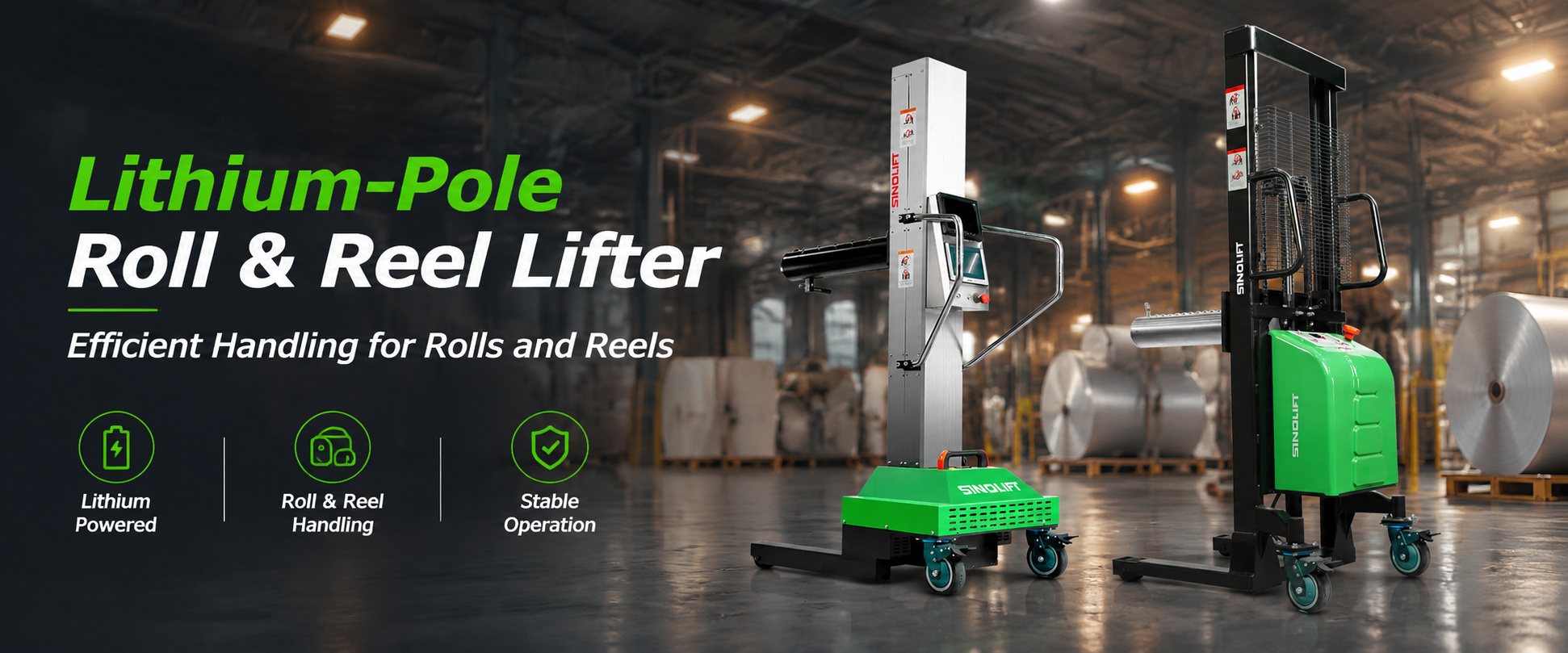
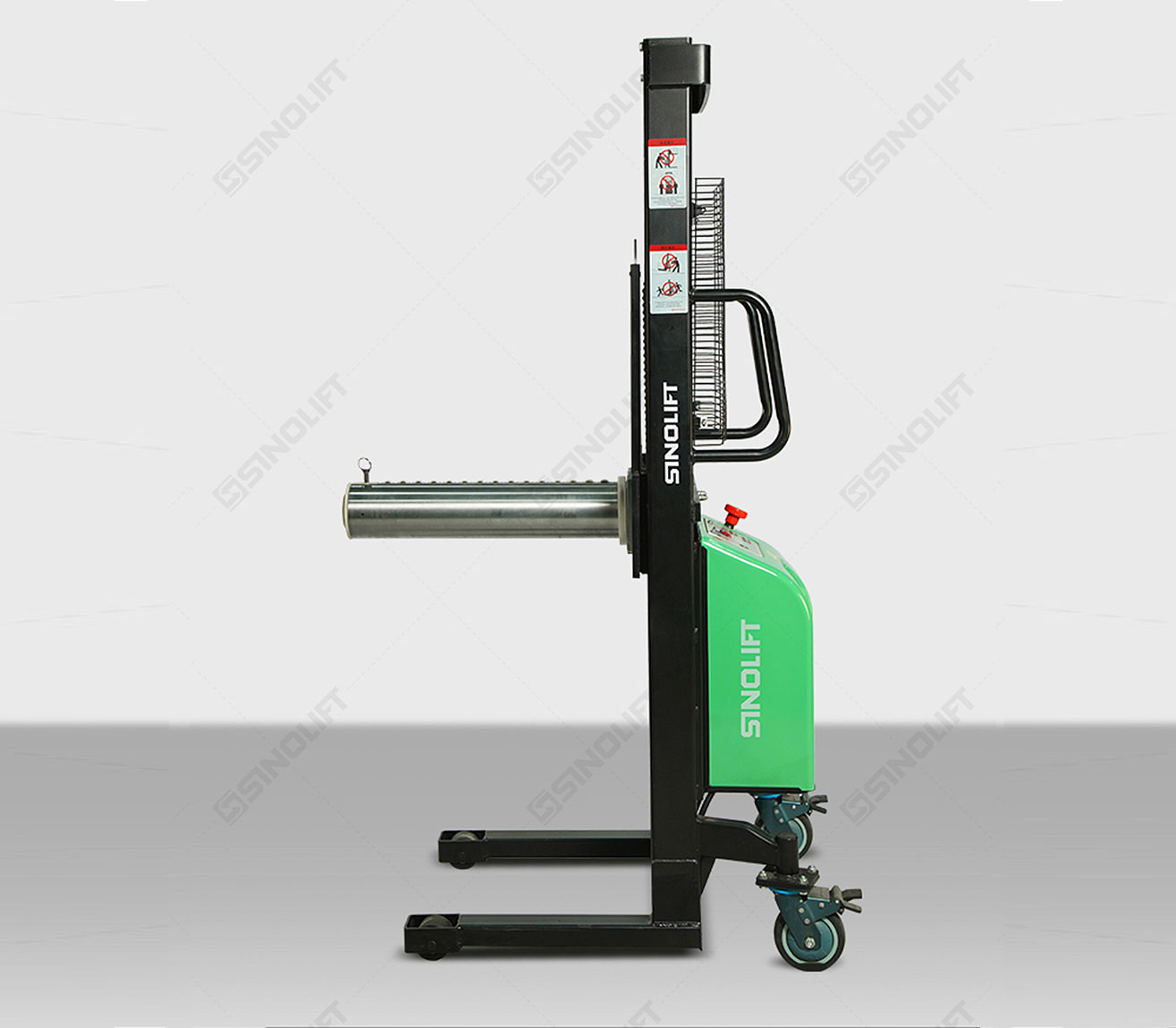
Sinolift offers two single-arm reel-handling products that can be considered for preliminary evaluation of this type of packaging application.
Compact Electric Single-Arm Reel Handling
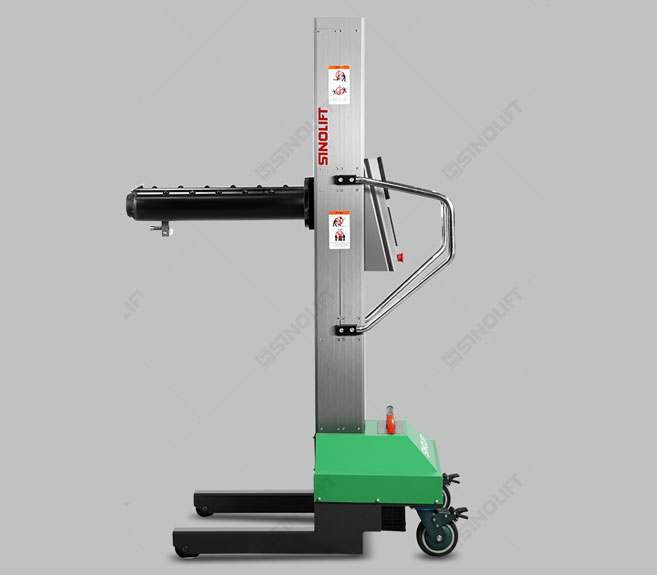
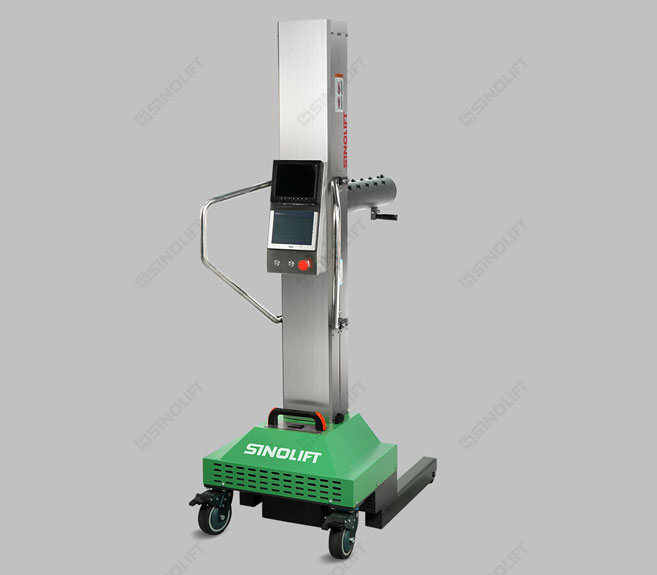
The ND95C is an electric reel stacker intended for handling materials such as film rolls, paper rolls and lithium battery electrode rolls.
Its published rated load is 600 kg. The product specification lists a 400 mm load center, 1,600 mm maximum boom-center height and 680 mm standard mandrel length.
The compact chassis and swivel caster arrangement are relevant considerations when checking indoor maneuvering requirements.
Smart Single Cantilever Reel Loading
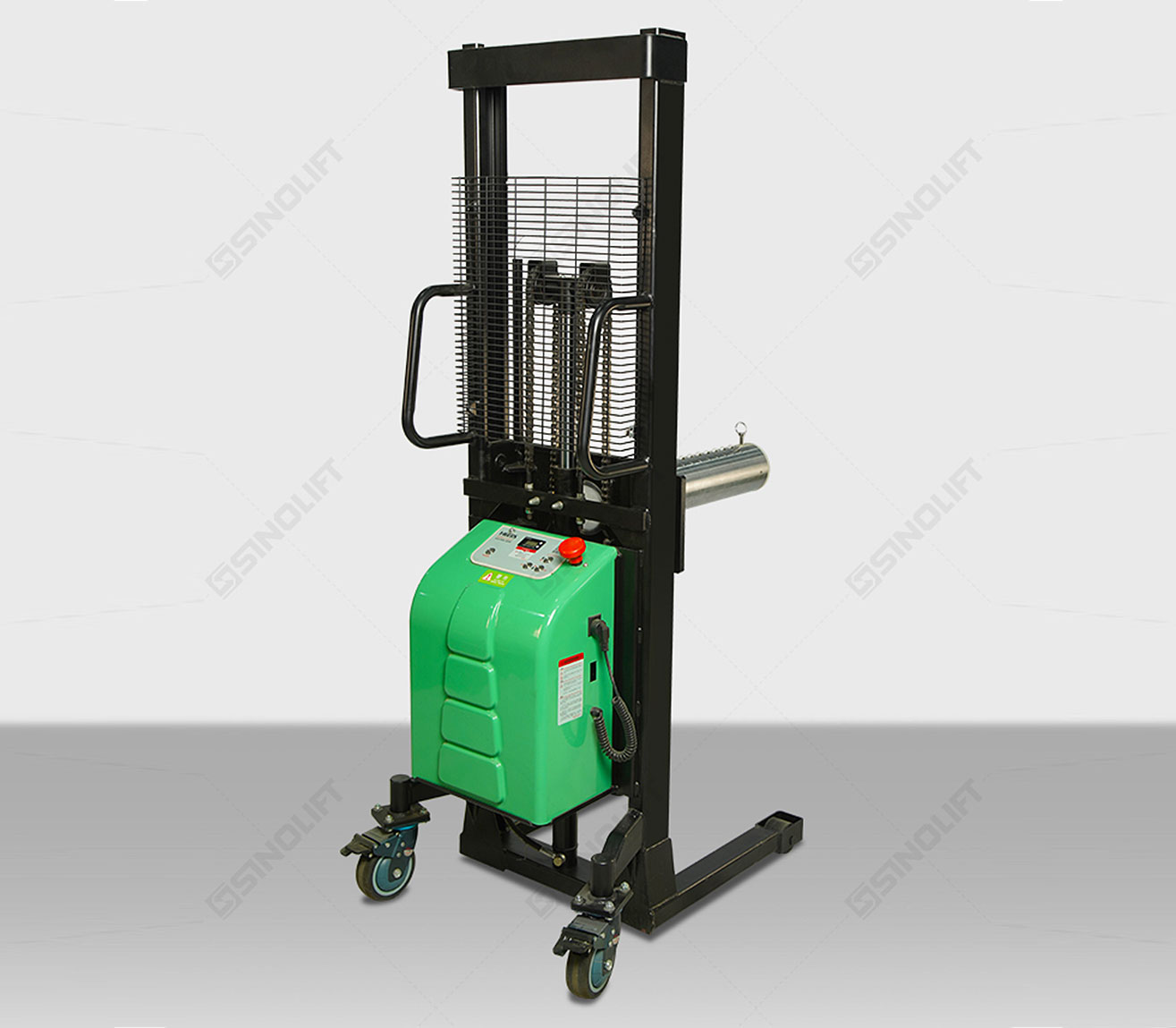
The SH01 is a semi-electric single-cantilever loading truck designed for coil-shaped materials. The published product description identifies electric lifting, a ball-screw drive method and PLC control.
Its rated load is 500 kg. The published cantilever specification is 136 × 680 mm, with a listed height range of 200–1,600 mm.
Its positioning and control features should be evaluated against the packing machine's actual loading process.
What Buyers Should Compare Before Requesting a Quote
| Specification | ND95C | SH01 |
|---|---|---|
| Rated load | 600 kg | 500 kg |
| Load center | 400 mm | 400 mm |
| Maximum height | 1,600 mm boom-center height | 1,600 mm listed maximum |
| Standard arm length | 680 mm | 680 mm |
| Overall length | 1,120 mm | 1,260 mm |
| Overall width | 660 mm | 634 mm |
| Equipment type | Electric | Semi-electric |
Important specification distinction: The 400 mm load center shown for both products is not the same as the customer's 400 mm reel width. A load-center check requires the actual load position relative to the equipment.
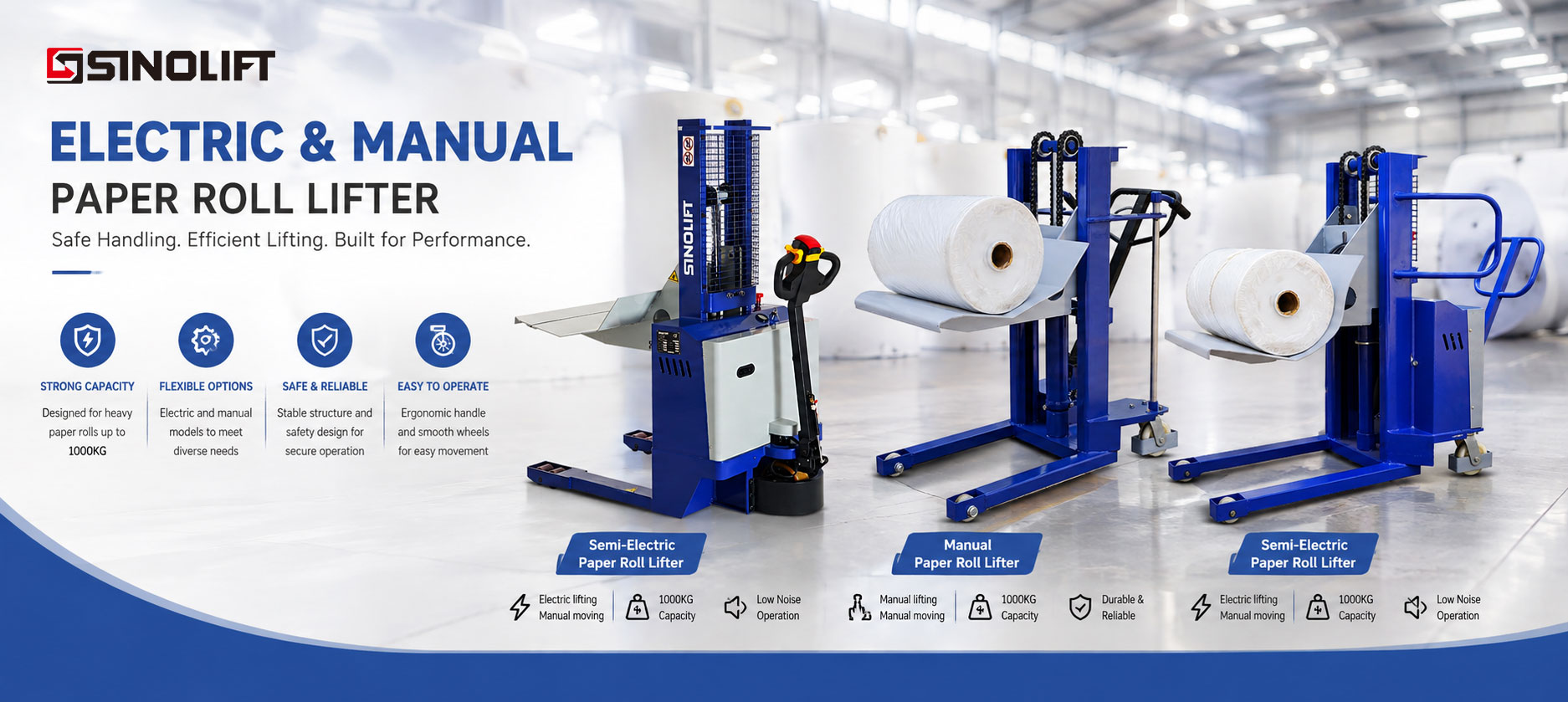
Is a Manual, Semi-Electric or Electric Lifter Better?
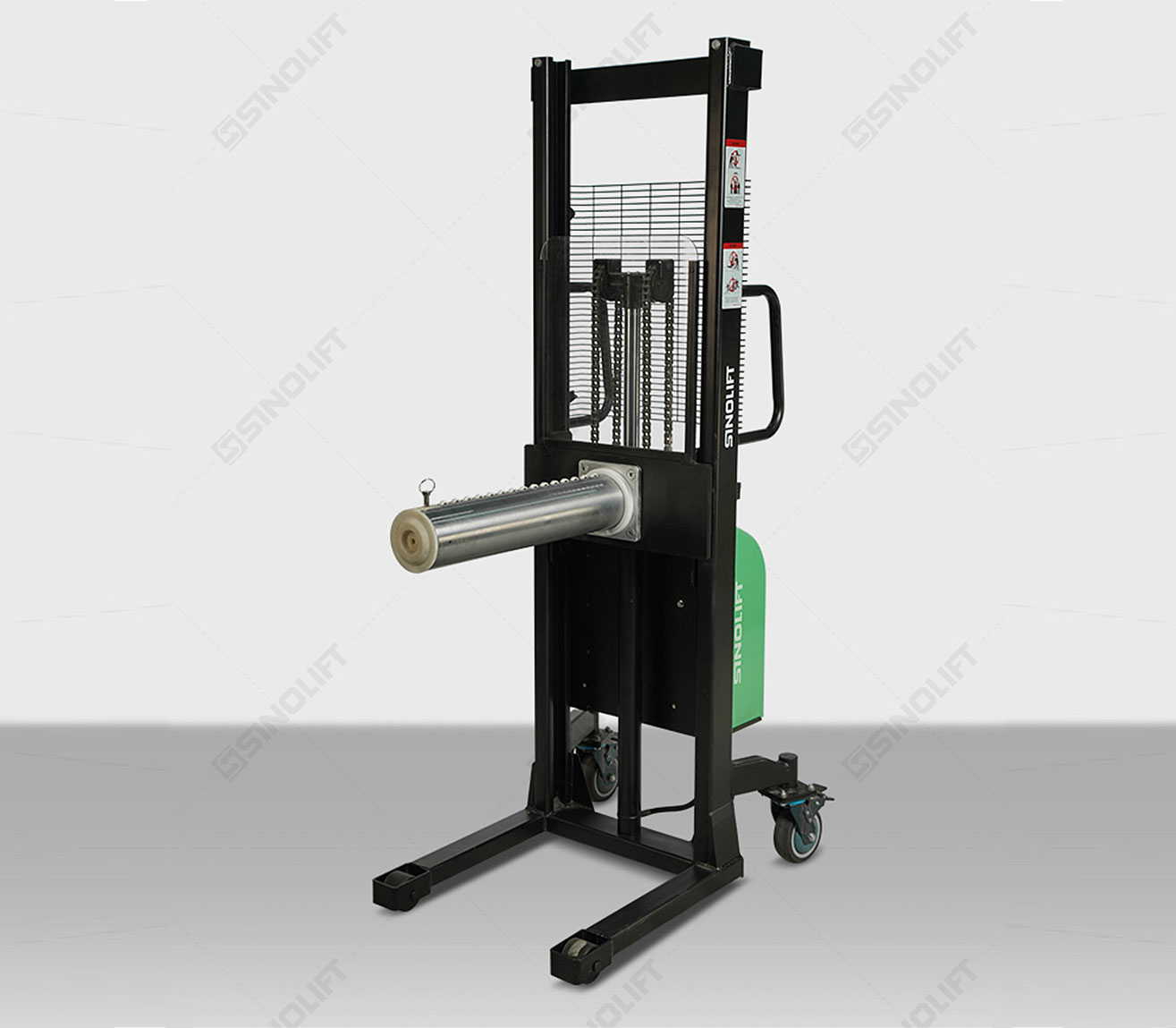
The right operating arrangement depends on the frequency of reel changes, travel distance, required positioning accuracy and operator involvement.
For Limited Handling Cycles
A manual or hand-pump design may be evaluated for occasional handling over a short, suitable route.
Buyers must assess the physical effort required to push, position and lift the loaded reel.
For Powered Lifting
A semi-electric arrangement can provide powered lifting while retaining manual involvement in some movement or positioning functions.
The SH01 belongs to this published equipment category.
For Electric Reel Handling
An electric reel stacker may be evaluated when powered lifting and repeated positioning are important to the operation.
Confirm precisely which functions are electrically powered on the selected configuration.
Can a Standard 680 mm Cantilever Handle a 400 mm-Wide Reel?
The customer's stated reel width of approximately 400 mm is less than the published 680 mm standard cantilever length of the ND95C and SH01. This makes the standard arm length worth evaluating as an initial dimensional reference.
It is not, however, a final compatibility confirmation. The actual usable insertion length, end clearance, arm cross-section, core opening and loading direction must all be checked.
The ND95C product page also lists a standard boom-size notation of Ø132–650 mm. The precise interpretation of that dimension needs factory clarification before it can be used to assess a reel with a 1,400 mm outside diameter.
Before approving a standard model: Obtain the reel's core inside diameter, usable core depth, actual axial width and packaging machine interface drawing. The factory should then confirm the appropriate mandrel configuration and permitted load position.
What to Include in Your Reel Lifter RFQ
A detailed request for quotation helps the supplier compare the load with the machine's actual handling geometry. For large plastic reels, photographs and dimensional drawings are especially useful.
| Information | Required Details |
|---|---|
| Material | Plastic reel / roll material |
| Maximum weight | 350 kg approximately |
| Outside diameter | 1,400 mm approximately |
| Reel width | 400 mm approximately |
| Core inside diameter | Actual measured diameter |
| Core depth | Usable insertion depth |
| Pallet dimensions | Length, width, height and entry access |
| Reel orientation | Horizontal or vertical storage position |
| Machine loading height | Required reel centerline height |
| Machine connection | Shaft diameter, insertion depth and direction |
| Operating frequency | Reel changes per shift and travel distance |
Frequently Asked Questions About Plastic Reel Handling
Can a 500 kg reel lifter handle a 350 kg plastic reel?
Its nominal rated capacity is higher than the stated reel weight, but suitability also depends on load center, mandrel engagement, stability and the approved operating configuration.
Is the reel outside diameter the same as the core diameter?
No. Outside diameter measures the complete wound reel. Core inside diameter measures the central opening into which a mandrel may need to enter. Both measurements are required for single-arm reel lifter selection.
Does a 400 mm reel width fit a 680 mm arm?
The stated width is nominally below the published arm length, but usable engagement and end clearance must be verified. It should not be treated as guaranteed compatibility.
What information is most important for a quotation?
The reel's weight, outside diameter, width, core inside diameter, usable core depth and required machine loading height are the most important starting points.
Conclusion: Select Around the Complete Reel-Loading Process
Handling a large plastic reel involves more than lifting the stated weight. The equipment must engage the reel, clear the pallet, travel through the available route and align with the packaging machine.
Sinolift ND95C and SH01 are relevant single-arm options for preliminary evaluation. The final selection should be based on the reel core, arm engagement, load center, machine loading height and actual operating frequency.
Buyers who provide the complete reel dimensions and machine interface details can obtain a more accurate equipment assessment before placing an order.
How to Choose Between Manual, Semi-Electric and Full-Electric Paper Roll Lifters