How to Choose Between Manual, Semi-Electric and Full-Electric Paper Roll Lifters
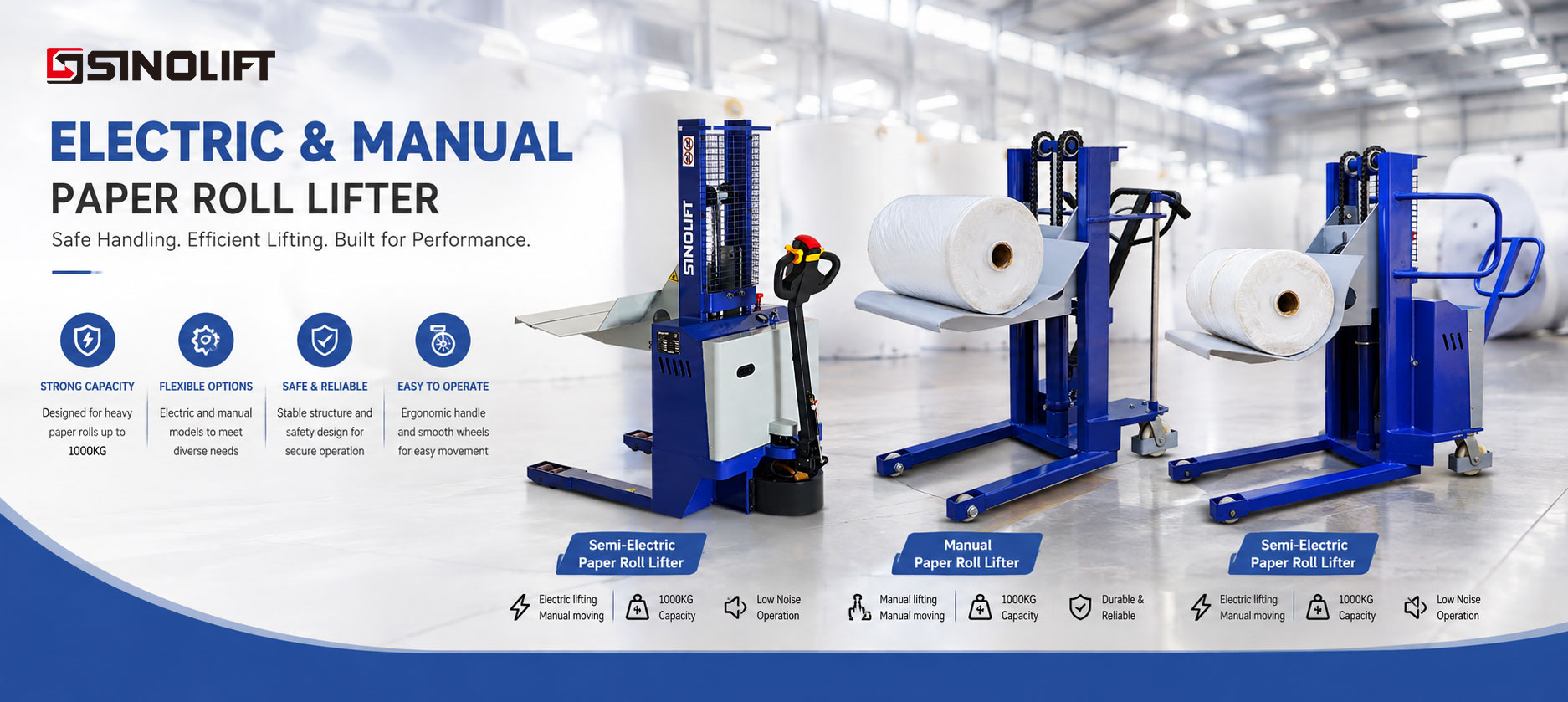
How to Choose Between Manual, Semi-Electric and Full-Electric Paper Roll Lifters
A practical selection guide for paper rolls, film reels and other cylindrical materials.
Choose the drive system according to workload, route and operator effort. A higher level of electrification is useful only when it matches the real handling process.
Step 01 / Occasional Work
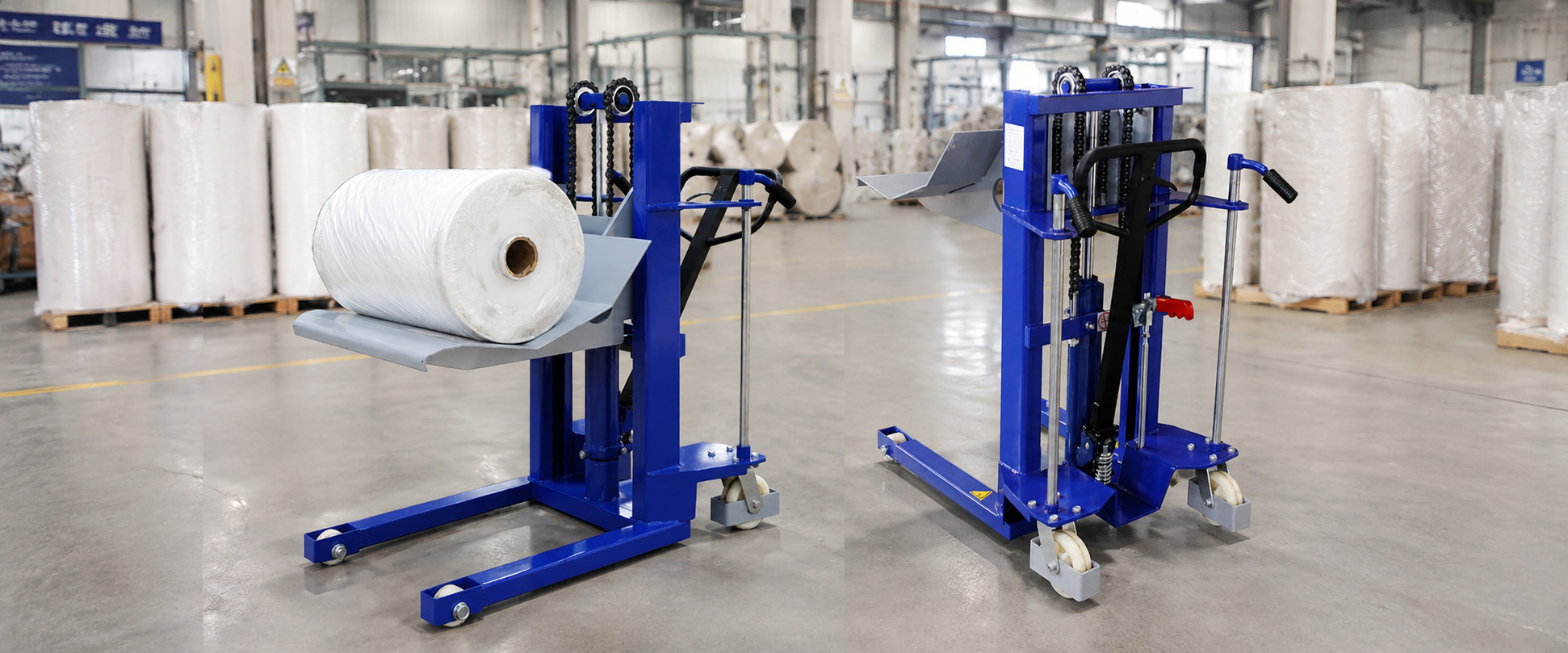
Choose CTY when the route is short
CTY1000-M700 uses a hand pump for lifting and manual push-pull travel. The published reference includes 1,000 kg capacity, 854 mm maximum platform elevation, 800 mm maximum roll diameter, 1,400 mm maximum roll width and 208 kg weight. It can suit occasional movement in a small workshop or storage area, but buyers should verify loaded push force, thresholds and floor condition.

Step 02 / Assisted Lifting
Choose CTD when lifting creates the main strain
CTD1000-M700 provides powered lifting while the operator controls travel manually. Its published reference lists 1,000 kg capacity, 841 mm maximum plate lift, 500 mm barycentre, 1,000 mm maximum roll diameter and 1,500 mm maximum roll width. The bracket pallet and electronic lock-and-protect concept are intended for cylindrical cargo. Confirm the actual roll geometry and centre of gravity before ordering.
Step 03 / Frequent Transfers
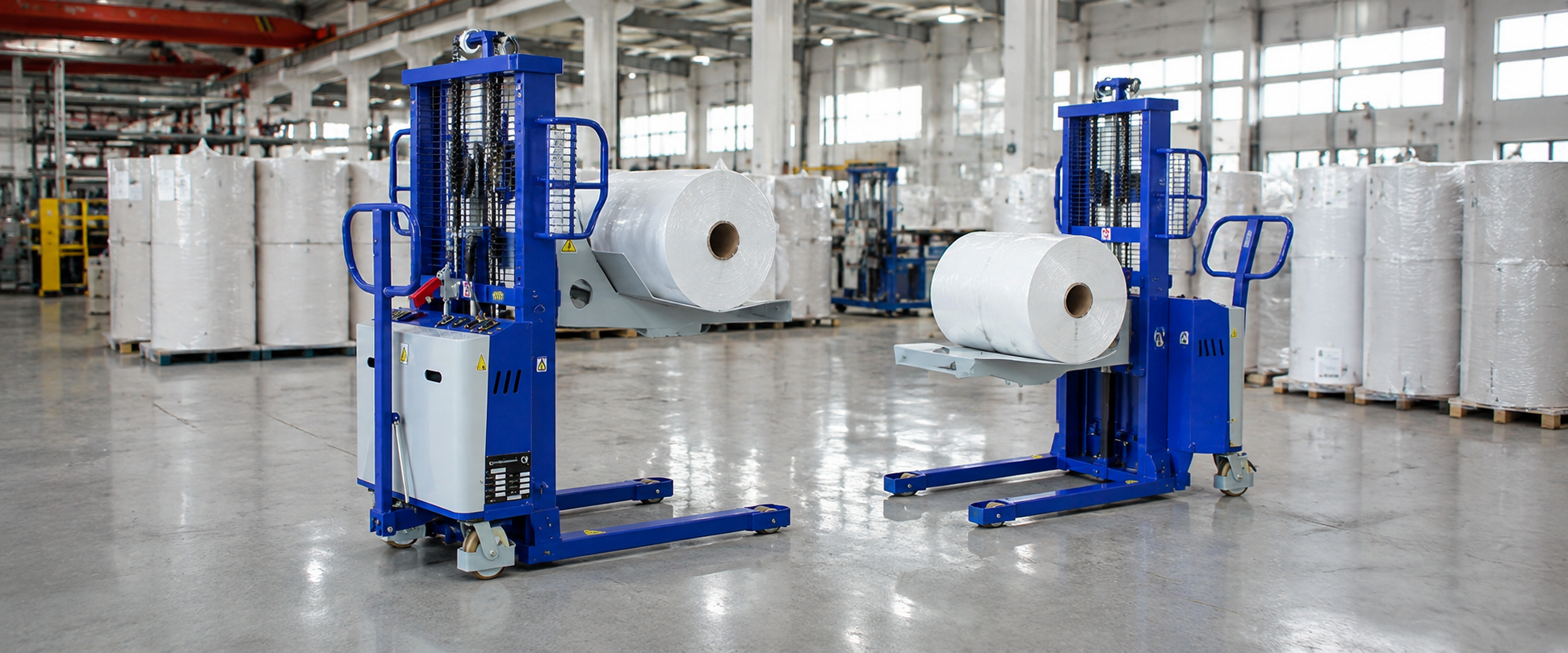
Choose CDD when travel repeatability matters
CDD1000-M700 combines electric lifting and electric walkie travel. The published reference lists a 1,000 kg version, 800 to 1,400 mm available reel diameter, 465 mm load centre, 1,220 mm cradle lift, 1,200 mm minimum turning radius, 24 V battery power and 364 kg service weight including battery. It is a stronger candidate for frequent transfer and machine positioning, subject to battery duty cycle and route review.
Buyer Matrix
Compare the three workflows
| Question | CTY Manual | CTD Semi-Electric | CDD Full Electric |
|---|---|---|---|
| Lift assistance | Hand pump | Powered lift | Powered lift |
| Travel | Manual | Manual | Electric |
| Good fit | Low frequency | Repeated lifting | Frequent movement |
| Main check | Push force | Interface and centre | Battery and route |
Application Pain Points
Different industries need different levels of assistance
Printing houses often need controlled delivery from storage to a printer or converting line. For occasional movement over a short route, CTY can be a practical lifting aid. When operators repeatedly lift rolls onto a nearby machine, CTD reduces lifting effort without requiring electric travel. When a production line needs repeated roll transfers throughout a shift, CDD is the stronger candidate for powered movement.
Film and flexible-packaging plants should focus on roll width, surface protection, alignment and approach direction. Textile plants should consider transfer frequency and required presentation height. Paper warehouses should measure long routes, expansion joints, ramps and charging locations. In every case, the largest roll should be used for route validation.
Procurement Checklist
Information that makes a quotation useful
Prepare maximum and normal gross load, roll diameter, width, core diameter, orientation, centre of gravity, pickup height, destination height, route length, narrowest aisle, turning points, floor condition, ramp information and movements per shift. Add indoor or outdoor use, dust, moisture, washdown, temperature, hygiene restrictions and proximity to operators. State whether the machine must pass a doorway, enter a truck, work beside a production line or position the roll against a spindle.
Practical Recommendation
Choose the equipment level the workflow can justify
CTY is the first model to evaluate when the budget is limited, handling frequency is low and the route is short. CTD is the middle option when the business wants powered lifting and precise manual travel. CDD is suitable when reduced travel effort, repeatability and a busy route justify battery-powered movement. Ask about load support, anti-roll protection, load centre, side-pull restrictions, final drawings, training and acceptance method before purchase.
At delivery, compare the model with the quotation, inspect the interface, test unloaded movement and complete a controlled trial with an approved roll. Record route observations and open verification items.
Visual Application Reference
Inspect the equipment before choosing the drive system
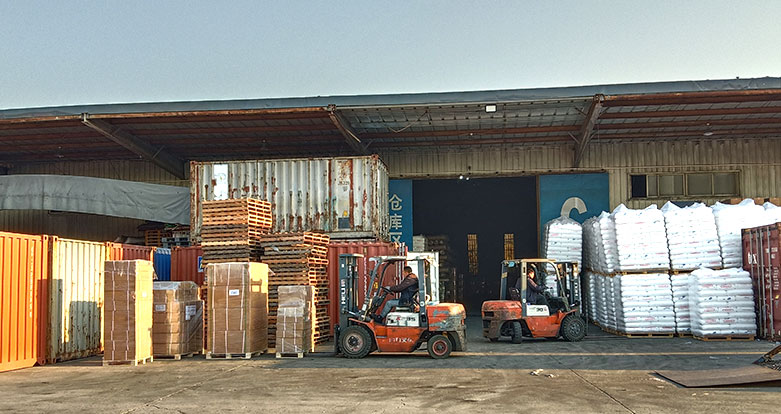
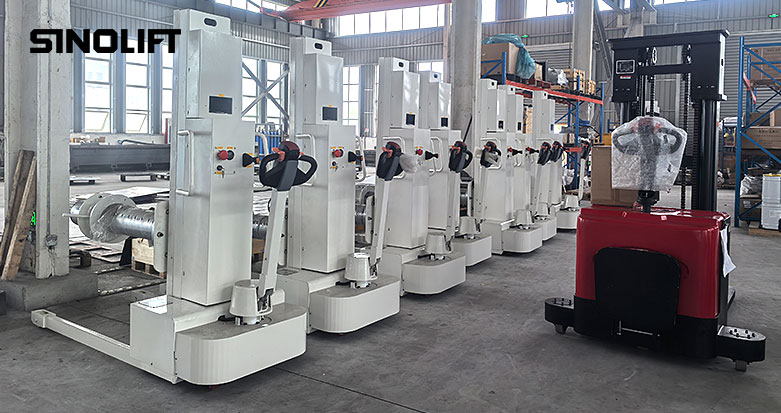
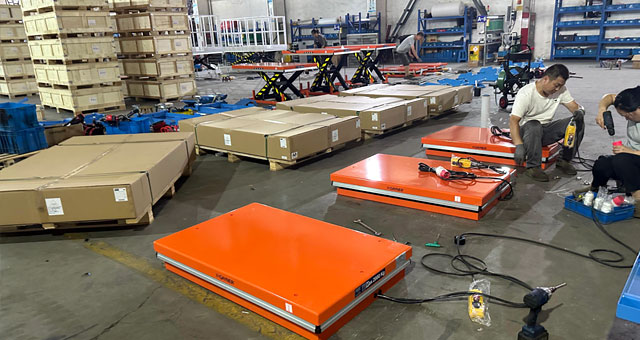
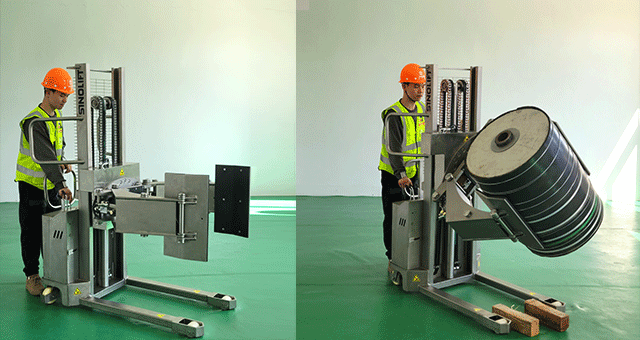
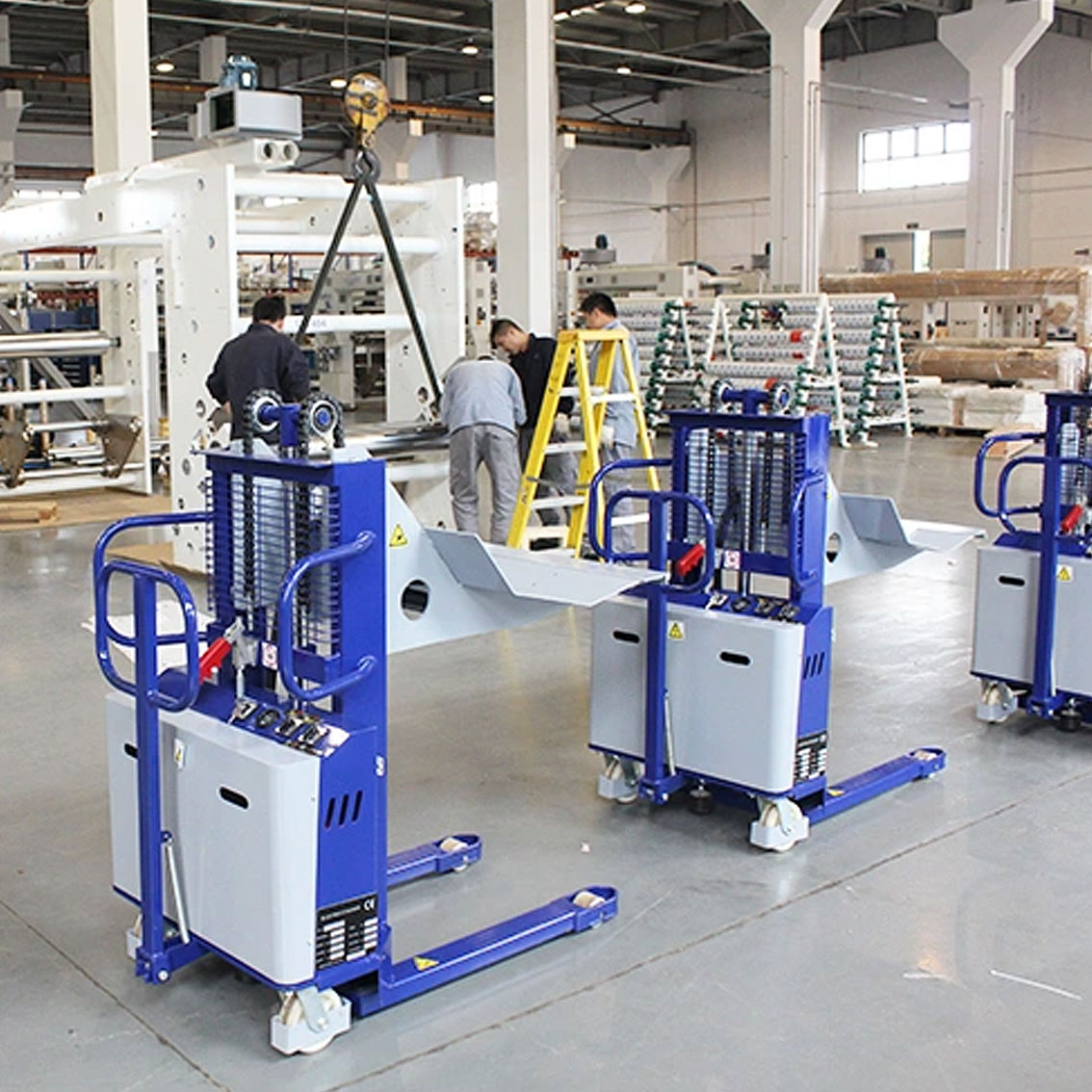
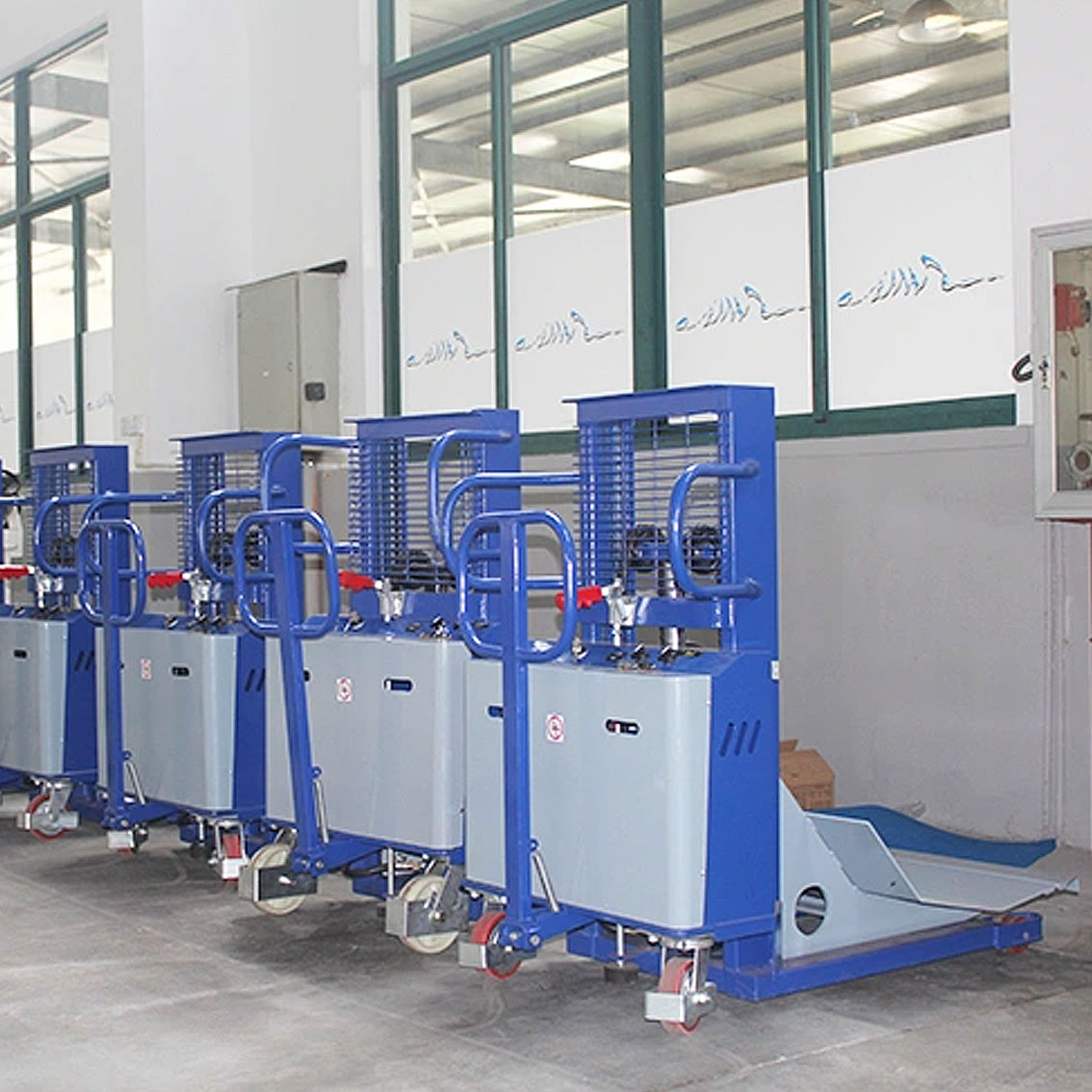
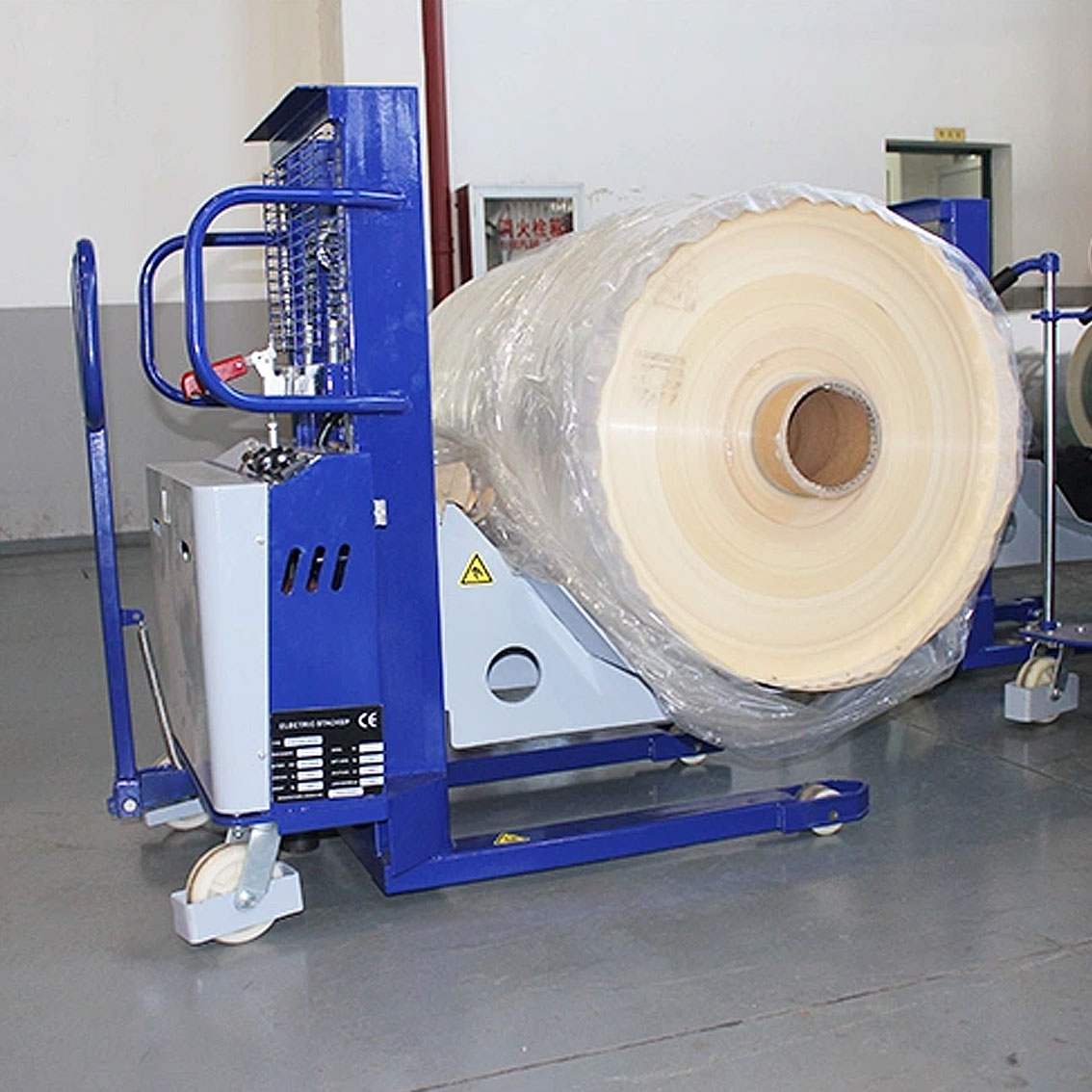
These images help procurement teams compare the visible structure of a CTD roll lifter: the front support area, mast, control zone, protective frame and factory footprint. The first two are shipment evidence from the supplied material. The last two are application-reference images and should not be treated as proof of a particular customer project or performance result.

FAQ
Buying questions
Is full electric always the best choice?
No. Manual or semi-electric equipment can be more practical for short, occasional routes.
Can the three models handle the same rolls?
Not automatically. Published roll ranges and load centres differ, so confirm the final load geometry.
What should be included in an inquiry?
Send weight, diameter, width, core, centre of gravity, lift height, route dimensions and handling frequency.
Request a product recommendation
Send roll dimensions and application details to market@sinolift.com. WhatsApp: +8613817178390.
Warm Congratulations on Our Mexican Customer’s Full-Container Order: A Showcase of Sinolift’s Roll-Handling Excellence