Manual vs Electric Pallet Jack: What's the Real Difference?
What Defines a Manual Pallet Jack?
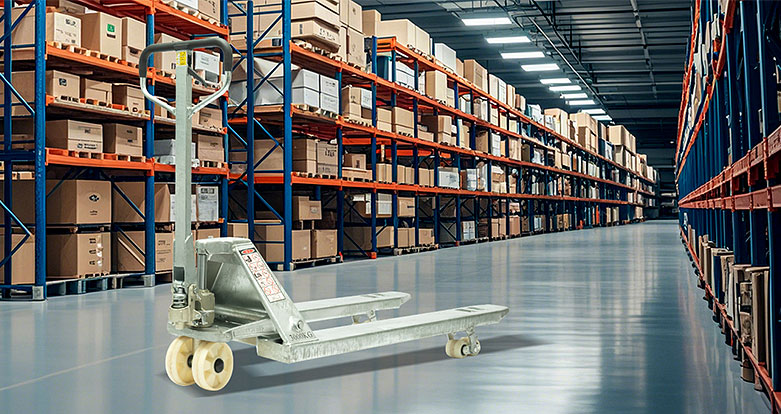
A manual pallet jack is a human powered, hydraulically actuated device designed for horizontal pallet transport. Operators position the forks beneath a pallet, then repeatedly pump the integrated lever to raise it off the ground .
- Low Capital Outlay: Entry level investments are minimal, ideal for nascent or budget sensitive operations .
- Compact Footprint: Slim dimensions facilitate maneuvering in narrow aisles, retail backrooms, and cold storage racks.
- Minimal Downtime: Absence of batteries or complex electronics equates to negligible maintenance demands.
However, the human element imposes physical strain on operators, especially when dealing with heavy loads or extended travel distances beyond roughly 12 meters (40 feet). For quick, infrequent moves, the manual jack remains an astute and cost effective choice.

Characteristics of an Electric Pallet Jack
An electric pallet jack—often termed a walkie or walk behind pallet truck—integrates a rechargeable battery pack, electric drive motor, and powered hydraulic pump. Upon engaging the throttle, the drive motor propels the jack; the lift function, likewise, is actuated automatically, obviating manual pumping. Salient advantages include:

- Enhanced Throughput: Operators can transport loads at higher average speeds, multiplying pallet moves per hour.
- Operator Ergonomics: Dramatically reduced muscular exertion diminishes fatigue and lowers the incidence of musculoskeletal injuries .
- Consistent Performance: Battery powered consistency ensures uniform lift heights and speeds across shifts.
Drawbacks comprise elevated upfront costs, periodic battery upkeep, and the necessity of charging infrastructure. Despite this, electric jacks often yield a compelling return on investment in high volume or multi shift environments.
Core Differences at a Glance
|
Aspect |
Manual Pallet Jack |
Electric Pallet Jack |
|
Power Source |
Human powered hydraulic pump |
Rechargeable battery and electric motor |
|
Typical Capacity |
Up to 2,500 kg (5,500 lb) in skilled hands |
2,000 kg to 3,000 kg (4,400 – 6,600 lb) and above |
|
Cost Profile |
Low initial cost; negligible maintenance |
Higher capital cost; battery replacement and charger maintenance |
|
Operational Range |
Optimal for ≤ 12 m (40 ft) |
Effective for longer aisles and frequent cycles |
|
Ergonomics |
Physical exertion can induce operator fatigue |
Minimal exertion; powered lift and drive functions |
|
Training & Safety |
Basic handling training sufficient |
Formal certification may be required for electric models |

Commonly Asked Questions
1.How Long Does an Electric Pallet Jack Take to Charge?
Most legacy electric jacks require 8 – 12 hours for a full charge using a standard charger. Advanced lithium ion models can recharge in 4 – 6 hours, or even 2 – 3 hours with opportunity charging protocols . Always defer to your manufacturer’s specification for precise times.
2.What Is the Battery Life Expectancy?
Electric pallet jack batteries typically sustain 800 – 1,500 full charge cycles, equating to roughly 1 – 5 years of service before capacity diminishes appreciably . Environmental factors, charging discipline, and usage frequency all influence longevity.
3.Do I Need Certification to Operate?
Hand Jacks: No formal certification is mandated, though operator training on safe handling is strongly advised .
Electric Jacks: Many jurisdictions stipulate certification akin to powered industrial truck licensing, ensuring operators comprehend controls, emergency protocols, and battery handling procedures .
4.Which Pallet Jack Is Better for My Warehouse Size?
Small Facilities (< 500 m²): Manual pallet jacks often suffice, delivering low cost agility in tight layouts.
Medium to Large Facilities (> 500 m²): Electric pallet jacks pay dividends in throughput and fatigue reduction when run times and distances escalate .
5.Can I Switch Batteries Mid Shift?
Models with quick exchange lithium ion batteries enable swappable packs weighing under 4 kg, allowing teams to swap in seconds and sustain continuous operation.

Integrating Sinolift Solutions
For optimized ergonomic performance, explore the Sinolift Electric Pallet Truck—a robust, lithium ion powered solution engineered for seamless lift and drive operation in high throughput environments. Visit the product page here:
➡️ Sinolift Electric Pallet Truck
If your workflow demands lean simplicity and minimal footprint, consider the Sinolift Hand Pallet Truck—an agile, maintenance free workhorse designed for tight aisles and occasional moves. Learn more here:
➡️ Sinolift Hand Pallet Truck

Strategic Considerations for Decision Making
- Throughput Requirements: Calculate pallets moved per hour and match with jack cycle times.
- Capital vs. Operational Cost: Balance up front expenditure against long term labor savings.
- Workforce Ergonomics: Factor in injury prevention and employee satisfaction.
- Facility Layout: Map travel distances and aisle widths to jack capabilities.
- Maintenance Infrastructure: Ensure power availability and battery management protocols for electric models.
Selecting between a manual and an electric pallet jack is more than a matter of budget—it is a strategic choice that reverberates through throughput, ergonomics, and operational agility. Manual pallet jacks shine in cost conscious, low distance contexts. Electric pallet jacks, with their mechanized prowess, excel in environments demanding sustained, high volume transport. Evaluate your facility’s unique demands against the performance matrix outlined above, then equip your team with the optimal pallet handling partner.
Sinolift offers customized services to meet various customer requirements. If you are interested in our products, feel free to contact us for more information. Visit our website at //www.sinoliftcorp.com, or reach us
via email at market@sinolift.com or WhatsApp: +8613817178390.
Elevating Efficiency: The Ultimate Guide to High Scissor Lift Pallet Jacks
A structured recommendation report on selecting between a pallet truck and a lift platform in material handling operations: