Mobile vs.stationary lift tables: key differences and how to choose the right one
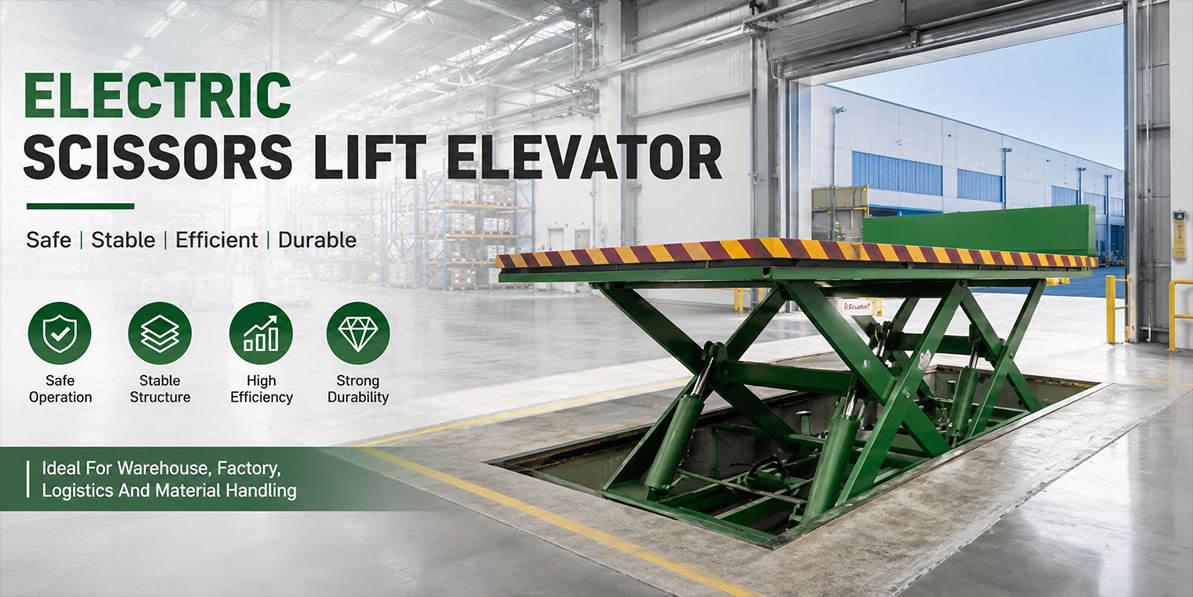
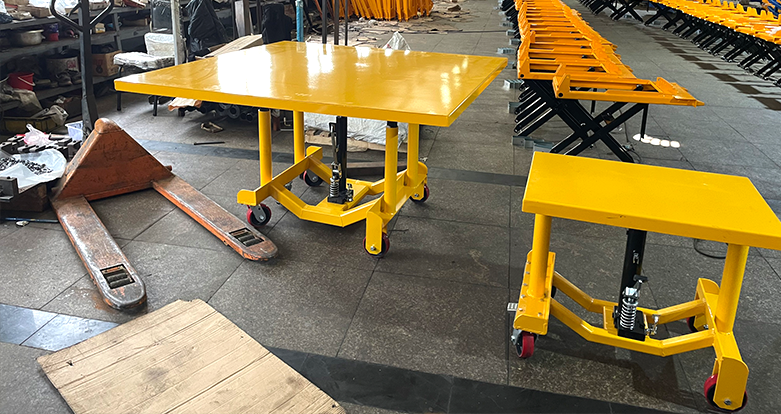
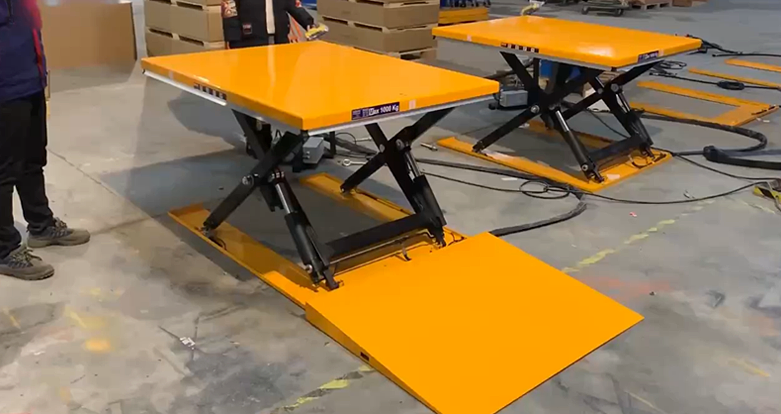
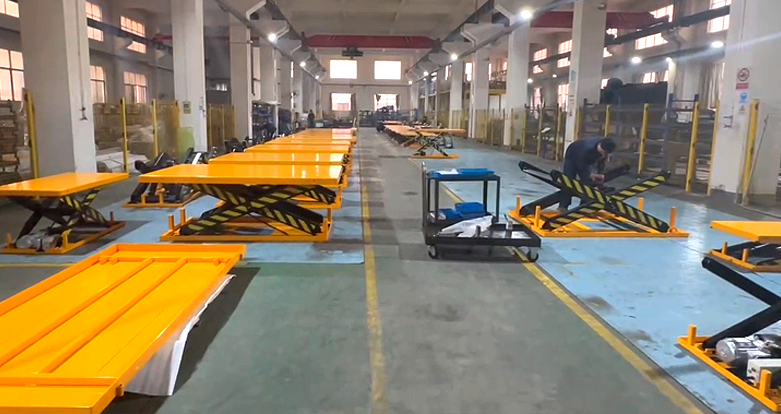
A stationary lift table is designed to remain in a fixed location, typically used where regular lifting or material handling at a specific point is required. These tables are more robust and can handle larger, heavier loads.
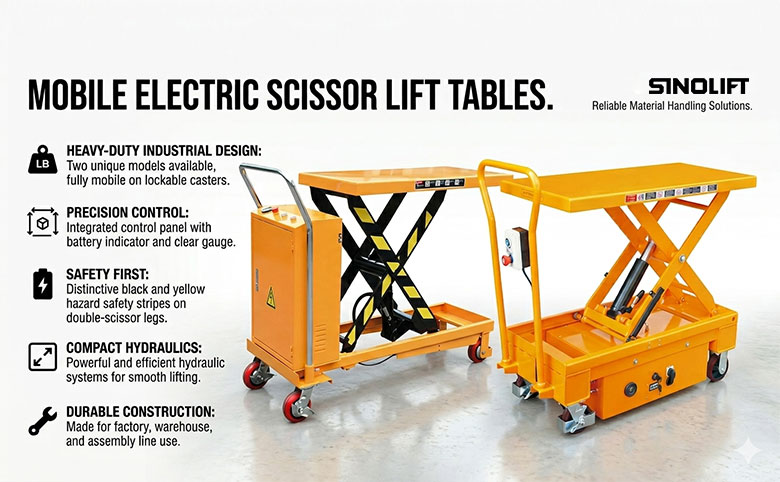
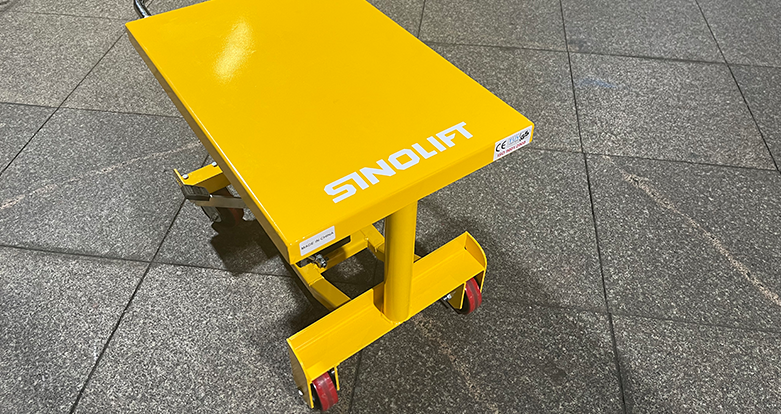
A mobile lift table is designed with mobility in mind, often equipped with wheels or casters, making it easy to move from one location to another. These lift tables are versatile and are commonly used in environments where items need to be transported between different areas.
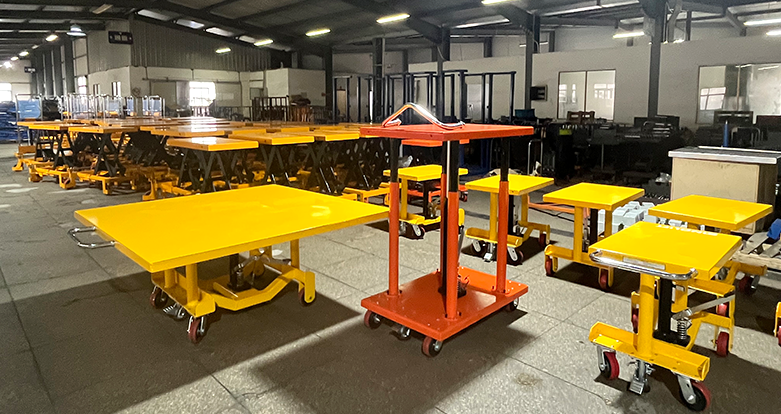
Sinolift have variety of scissor lift tables,Choosing between a mobile lift table and a stationary lift table depends on your specific operational needs. Here are the critical differences and factors to help you decide:
1. Mobility
- Mobile Lift Table:Equipped with wheels or casters for easy movement across different workstations or areas.
- Ideal for tasks requiring frequent repositioning or transport of loads.
- Stationary Lift Table:Permanently installed in one location.
- Best for fixed workstations where lifting and lowering are consistent but mobility isn’t needed.
2. Load Capacity
- Mobile Lift Table:
- Typically has a lower load capacity compared to stationary models due to mobility constraints.
- Suitable for light to medium-duty tasks.
- Stationary Lift Table:
- Offers higher load capacities, often capable of handling several tons.
- Designed for heavy-duty industrial applications.
3. Stability
- Mobile Lift Table:
- Stability may be affected during movement, especially under heavy loads.
- Brakes and locking mechanisms are used to ensure stability when stationary.
- Stationary Lift Table:
- Provides superior stability due to its fixed base.
- Suitable for precision tasks or where load movement could be hazardous.
4. Power Options
- Mobile Lift Table:
- Often uses manual, battery-powered, or hydraulic systems to allow for flexibility.
- May need recharging or regular maintenance of mobile components.
- Stationary Lift Table:
- Usually powered by electric or hydraulic systems with direct access to a power source.
- Can support continuous or heavy-duty use without frequent recharging.
5. Cost and Installation
- Mobile Lift Table:
- Generally more affordable and requires no installation.
- Ready-to-use with minimal setup.
- Stationary Lift Table:
- Higher initial cost due to installation and often requires professional setup.
- Long-term investment for permanent solutions.
6. Space Requirements
- Mobile Lift Table:Space efficient and can be stored or moved when not in use.Suitable for workplaces with limited space or dynamic layouts.
- Stationary Lift Table:Requires dedicated space for installation.Fits best in facilities with established workflows.
How to Make a Choice
Consider Mobility Needs:
- If your tasks require moving loads between workstations, opt for a mobile lift table.
- For fixed workflows, go for a stationary lift table.
Assess Load Requirements:
- Light to medium loads → Mobile lift table.
- Heavy, industrial loads → Stationary lift table.
Evaluate Space and Stability:
- Limited space or flexible layout → Mobile lift table.
- Precision and stability-critical tasks → Stationary lift table.
Budget:
- Lower budget or temporary needs → Mobile lift table.
- Long-term investment → Stationary lift table.
By aligning these factors with your operational goals, you can make an informed decision that enhances productivity and safety.Sinolift offer customization services for stationary lift tables. If you have any specific customization requirements, please feel free to contact us if you are interested in our products,For further information visit us at: //www.sinoliftcorp.com, email market@sinolift.com, whatsapp:+8613817178390,thank you.
Sinolift China advanced self-propelled electric lift table for effortless lifting
Key considerations for choosing the right stationary lift table