E250Z-15 Customized Single-Mast Lifting Trolley: Compact Design with a Forward-Reaching Arm
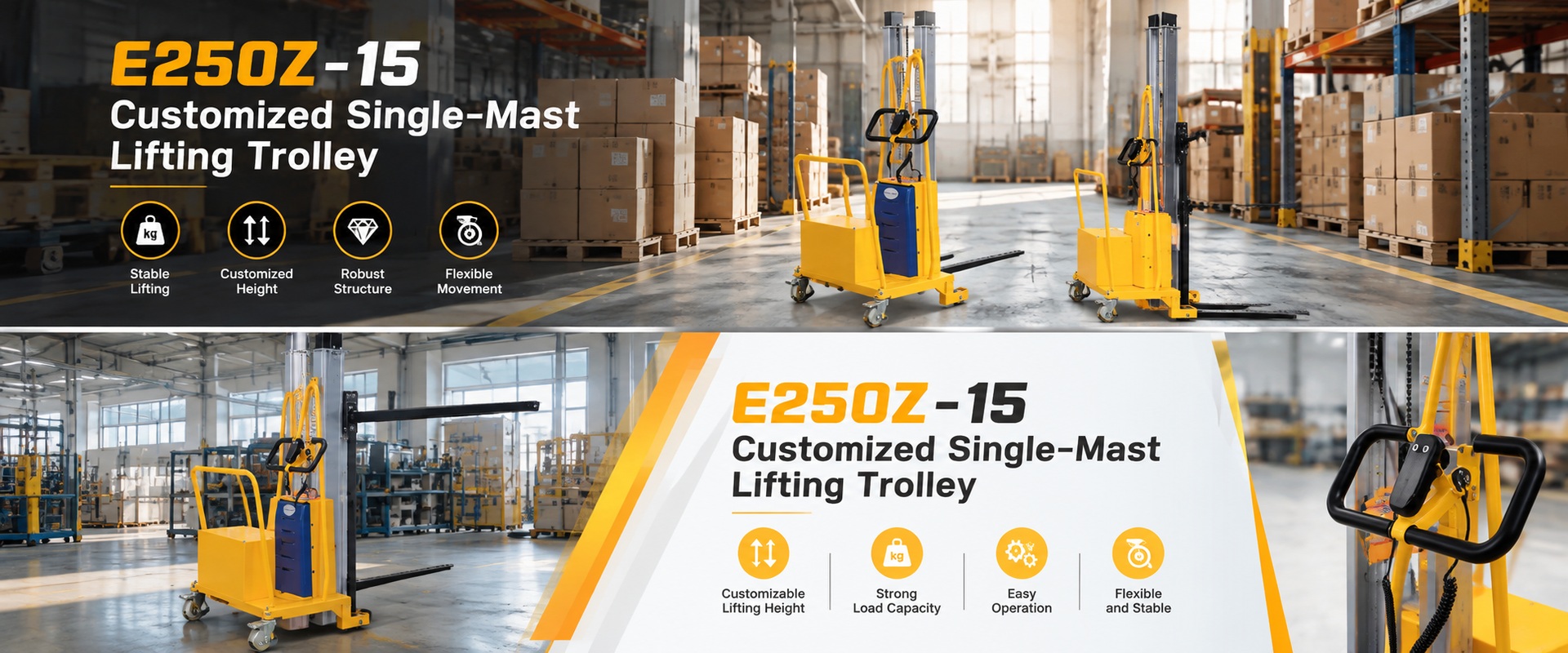
E250Z-15 Customized Single-Mast Lifting Trolley: Compact Design with a Forward-Reaching Arm
Some handling tasks call for more than a standard platform or two-fork stacker. The E250Z-15 shows how a single-column mast, a projecting support arm and a counterbalanced trolley layout can be brought together in a specialized lifting-equipment configuration.
When a Conventional Lifting Platform Does Not Match the Load Interface
Standard material-handling products are useful when their support platform, fork spacing and access dimensions match the object being handled. A different kind of problem arises when the load must be contacted from a specific direction or a narrow arm must extend beyond a mast.
The E250Z-15 design illustrates one possible equipment architecture for this category of requirement: a single vertical column guides the lifting assembly while a long, narrow arm projects forward. A low chassis with a rear-mounted housing and push handle completes the visible arrangement.
The source material consists of a dimensioned engineering drawing and three workshop photographs of a corresponding physical unit. It documents a specialized machine configuration; it does not identify a customer, the original order specification or a completed on-site installation.
What makes this configuration distinctive: Instead of using a broad table surface or paired pallet forks, the drawing shows one forward-extending arm that could be evaluated against a specially defined load interface. The arm's permitted loading method must be confirmed for the intended application.
What the Workshop Photographs Show
Central Single-Column Mast
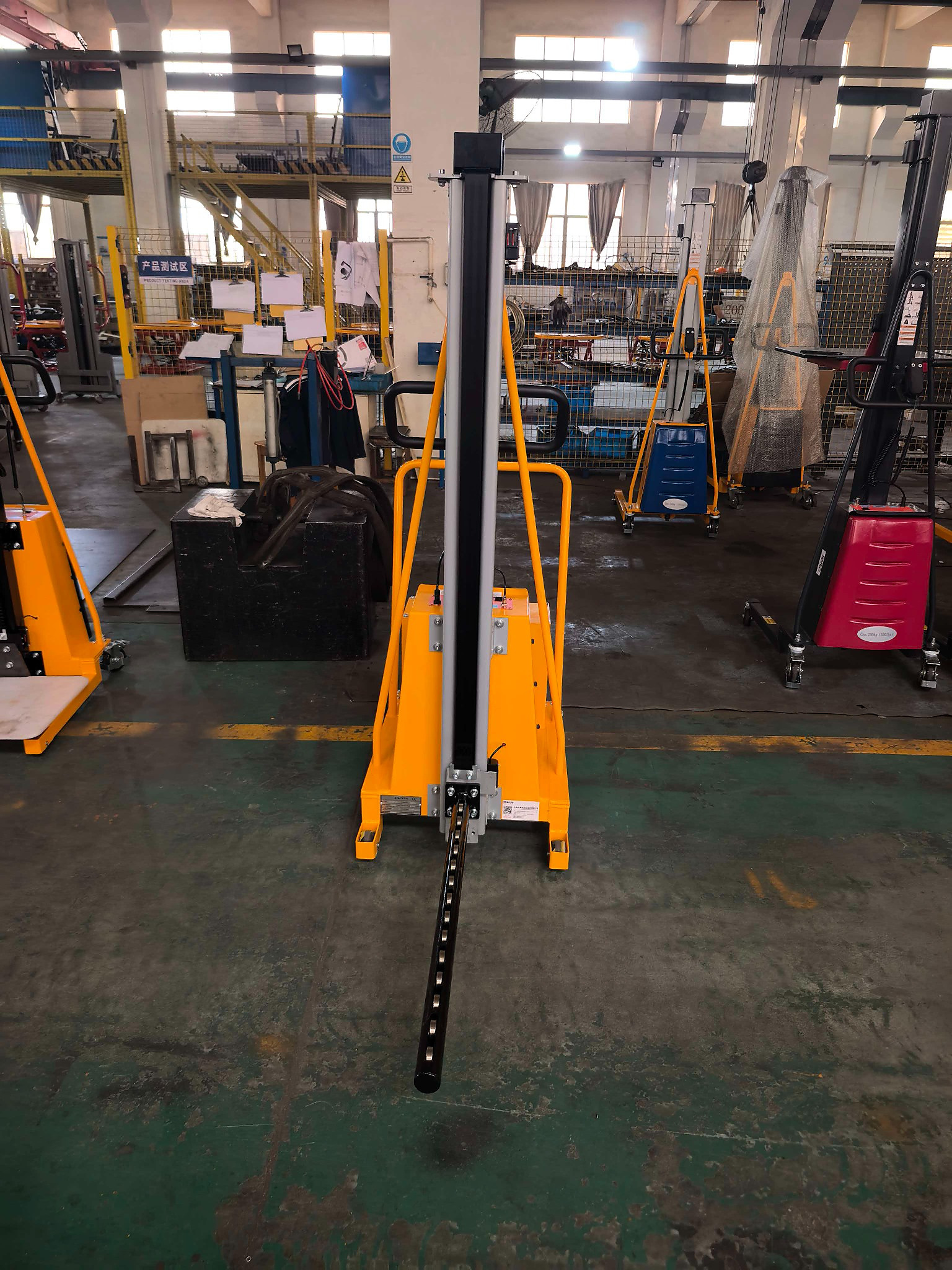
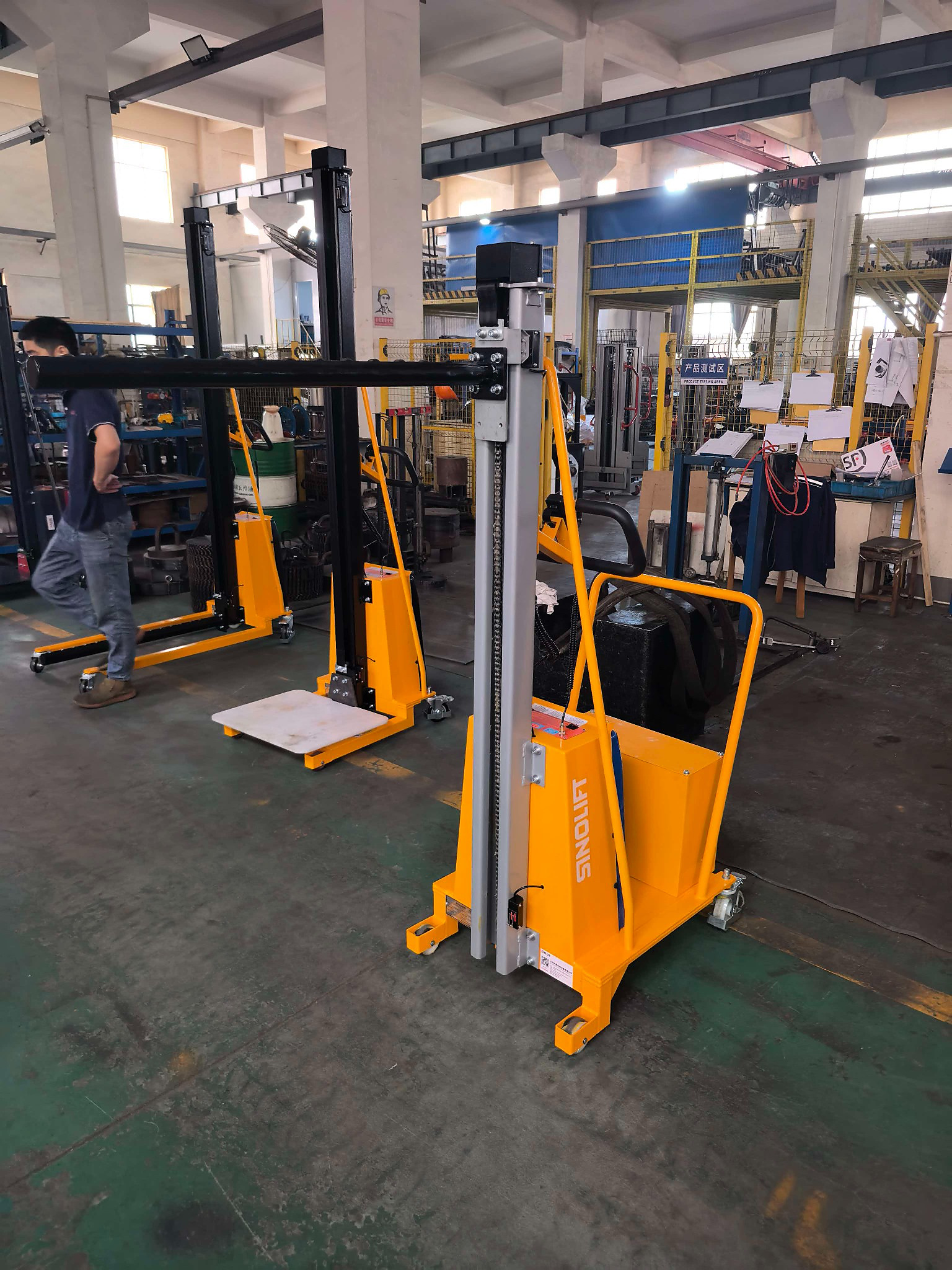
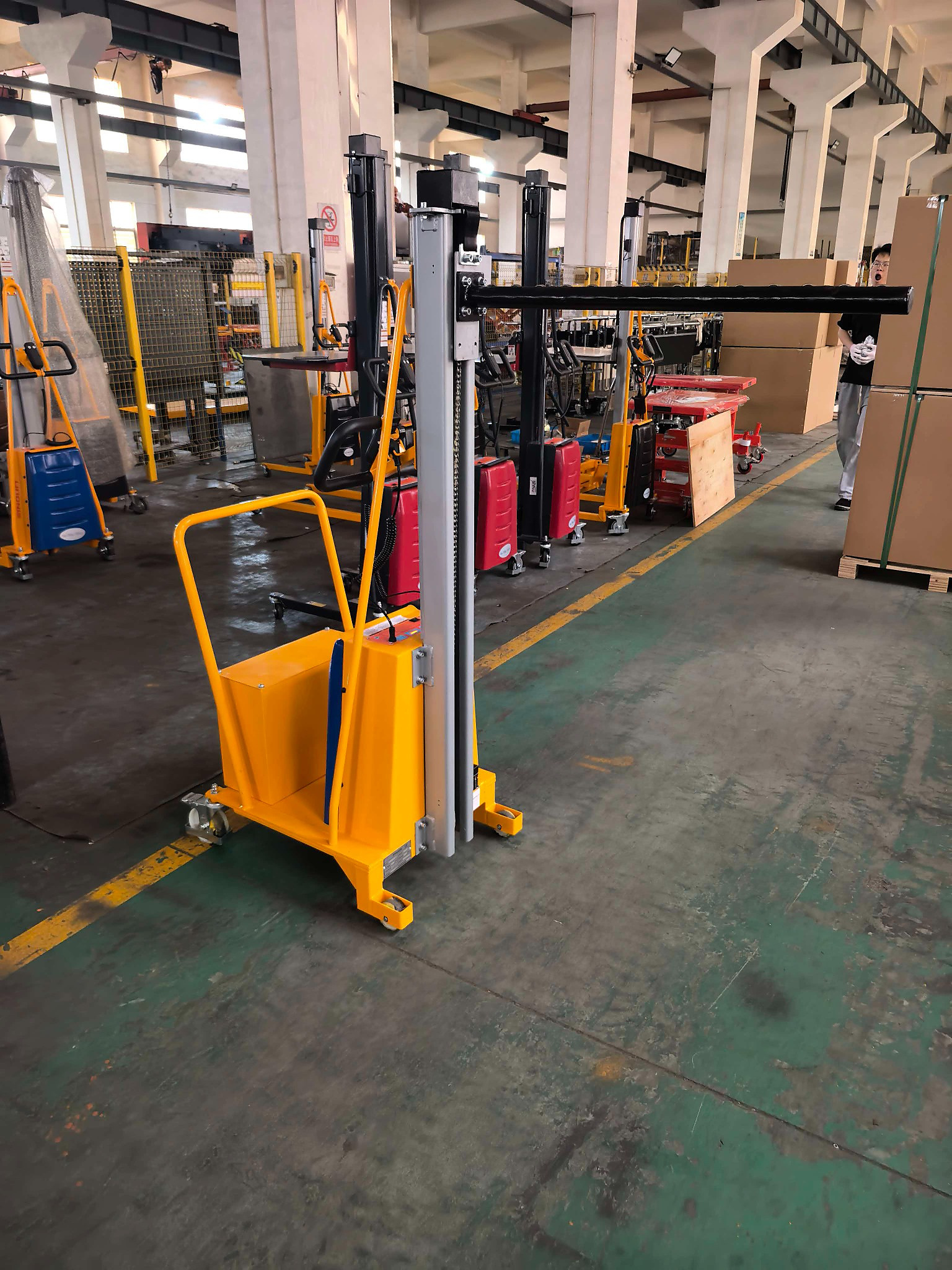
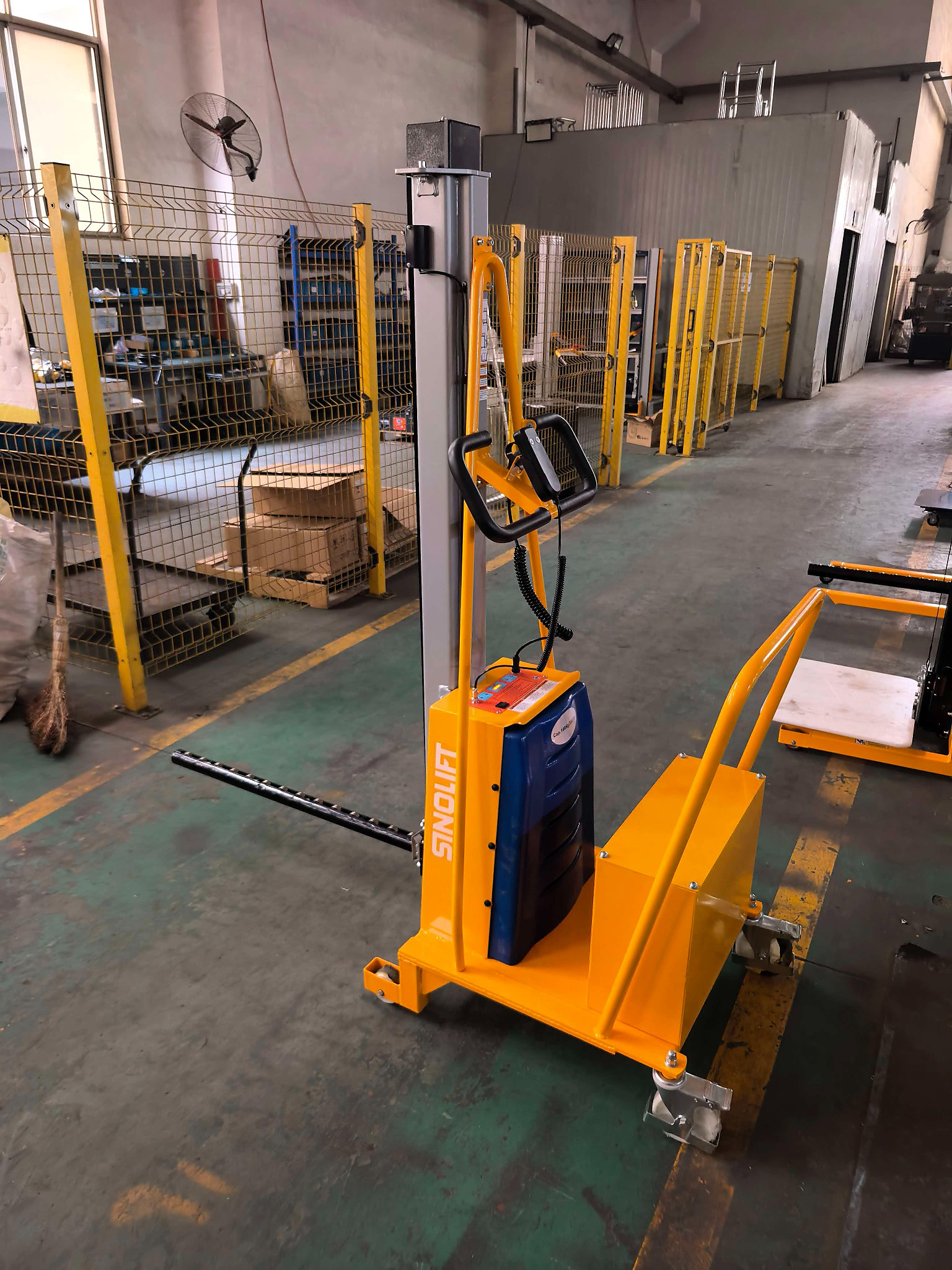
The assembled unit has a tall central upright with a lifting carriage. The narrow mast arrangement is consistent with the side, front and perspective views in the drawing.
Forward-Extending Support Arm
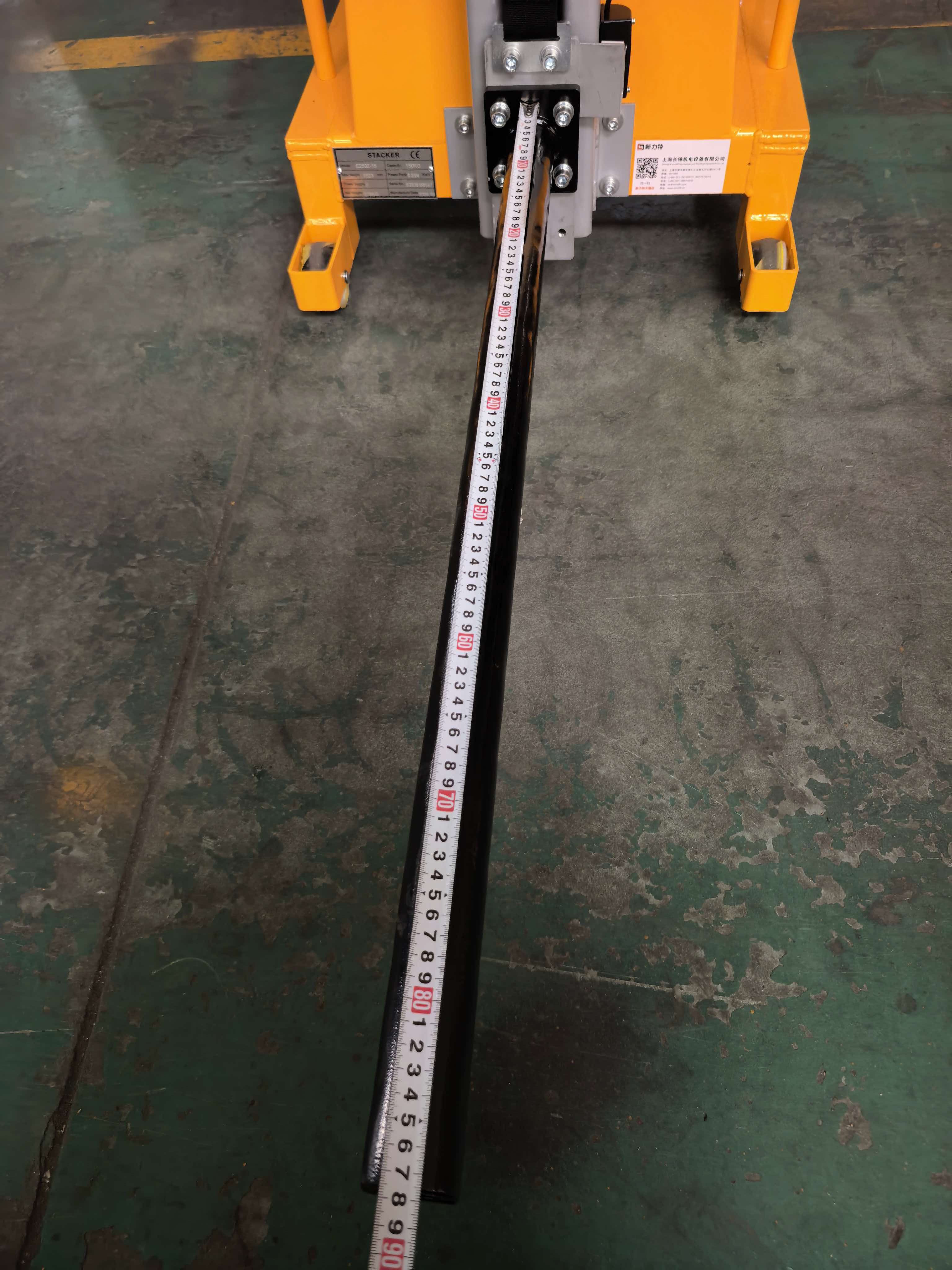
A long, tubular-looking black arm extends in front of the mast. A separate close-up shows the arm being measured in the workshop. The drawing identifies an 880 mm horizontal dimension along this member.
Rear Body and Push Handle
The machine has a yellow rear enclosure, a push handle and a low chassis. The drawing names the machine a counterbalanced trolley, but does not provide the internal counterweight arrangement or its mass.
Mobile Casters and Controls
Swivel-style wheels and an operator-control assembly with visible wiring appear in the photos. They show the equipment's physical layout, not verified travel-drive performance or operational test results.
Why the Load Interface Comes First
For non-standard lifting equipment, the shape and contact points of the load often influence the machine more than nominal capacity alone. A forward-projecting arm can be relevant when a component or dedicated fixture requires a particular entry path, but the loading method has to be defined before engineering suitability can be judged.
Reach into a Work Position
Before specifying an arm, determine the distance from the mast to the target load position and the obstacles around the approach path.
Support a Defined Load Shape
Specify where the load contacts the arm or how a dedicated fixture holds it. Do not assume a tubular member is appropriate for every material.
Move within Available Floor Space
Consider overall trolley length, rear-body clearance, casters, thresholds and maneuvering room around the workstation.
These are potential application considerations, not claims about a documented customer deployment. The appropriate working envelope, fixture design and operating method must be evaluated for each new project.
E250Z-15: Project Evidence at a Glance
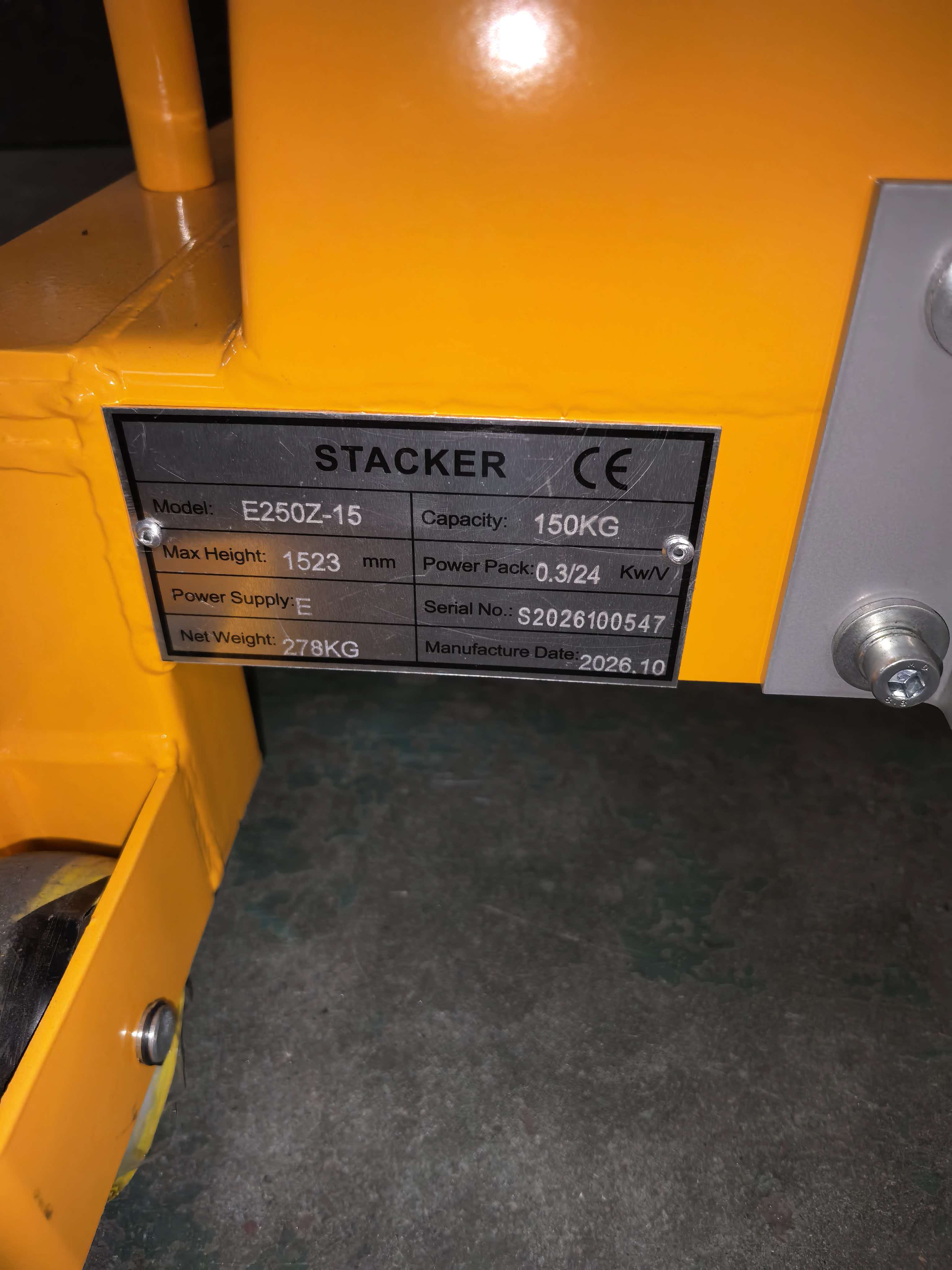
The supplied drawing records several basic dimensions and the equipment code. These are useful as references to the illustrated configuration, but they do not substitute for a final, approved machine specification.
| Specification | Drawing Value | Buyer Note |
|---|---|---|
| Drawing / model code | E250Z-15-00-000 | Confirm exact ordering designation |
| Load shown | 150 kg | Load position and approval conditions require confirmation |
| Arm projection dimension | 880 mm | Not a certified universal load-center distance |
| Overall length on drawing | 1702 mm | Check access and turning room |
| Overall height on drawing | 1761 mm | Check clearances and mast position |
| Equipment form | Counterbalanced, single-column mobile lifting trolley | Specific working method requires review |
Where Could a Similar Special-Purpose Trolley Be Evaluated?
Different factories encounter different handling interfaces. Where a standard lifting platform cannot reach the support point or conventional fork geometry obstructs the transfer, a separately engineered arm-type trolley may be worth investigating.
Component Presentation at a Workstation
A custom arm or fixture may be considered when an item needs to approach a defined workstation position from one side. The receiving interface and component center of gravity determine feasibility.
Special Fixture Transfer
Some jigs or dedicated process fixtures have an unusual support geometry. Their contact arrangement may require engineered support rather than a standard table.
Compact Indoor Handling Routes
The single-mast layout may be investigated where the route and loading access are constrained. Overall machine dimensions must be evaluated against the actual site.
Production Equipment Interface
A suitable lifting trolley may be considered when an object must be aligned with a machine opening or receiving stand. This requires technical review; no such installation is documented here.
What Is Documented and What Must Still Be Checked?
The drawing includes four views of the machine and labeled geometry. The workshop photographs show the assembled E250Z-15-type layout, including the distinctive mast, horizontal arm, rear enclosure and caster-mounted chassis. One photograph shows a tape measure placed along the arm.
That evidence is valuable for understanding construction and scale. It is not the same as an approved load test, customer acceptance report or installation record. Before a similar unit is purchased for a specific task, its operating height, permissible load position, holding or braking method, power arrangement and applicable instructions must be confirmed.
Procurement guidance: Treat drawing dimensions as design references. Request the latest approved specification and site-specific suitability review before finalizing a specialized lifting order.
Five Details to Prepare Before Asking for a Similar Solution
Load Dimensions
Provide the maximum mass, outside dimensions, center of gravity and any fragile or restricted contact areas.
Support Interface
Explain how the part is supported or retained and whether a fixture or insertion arm is required.
Required Reach
Measure the horizontal distance to the working position and available approach clearance.
Height Positions
Record pickup, transfer and release heights; include any limited overhead clearance.
Worksite Layout
Share floor conditions, aisle dimensions, travel routes, power needs and photographs.
With these details, the discussion can focus on whether an existing product is suitable or a separate engineering design is necessary. The E250Z-15 geometry should not be assumed to fit every proposed handling task.
Common Questions About This Custom Lifting Concept
What is the rated load of the E250Z-15 design?
The engineering drawing states a 150 kg load. The supplied sources do not give a complete load-center chart or independently documented load-test results.
Can the machine be used for standard pallets?
The drawing shows one forward-projecting arm, not conventional two-fork pallet geometry. Pallet use cannot be assumed without a verified support interface.
Is this a powered-travel trolley?
The photographs show controls and a wheeled chassis, but do not establish whether travel is electrically driven. Confirm travel and lifting methods for any configuration.
Can a similar machine be made for another part?
A similar requirement can be considered for engineering review. Dimensions, capacity, fixture arrangements and operating functions must be assessed for the specific part and worksite.
Sinolift drum rotating tumbler thorough mixing Inside a sealed drum