
Beyond Pallets: Rough Terrain Pallet Truck Attachments for More Handling Tasks
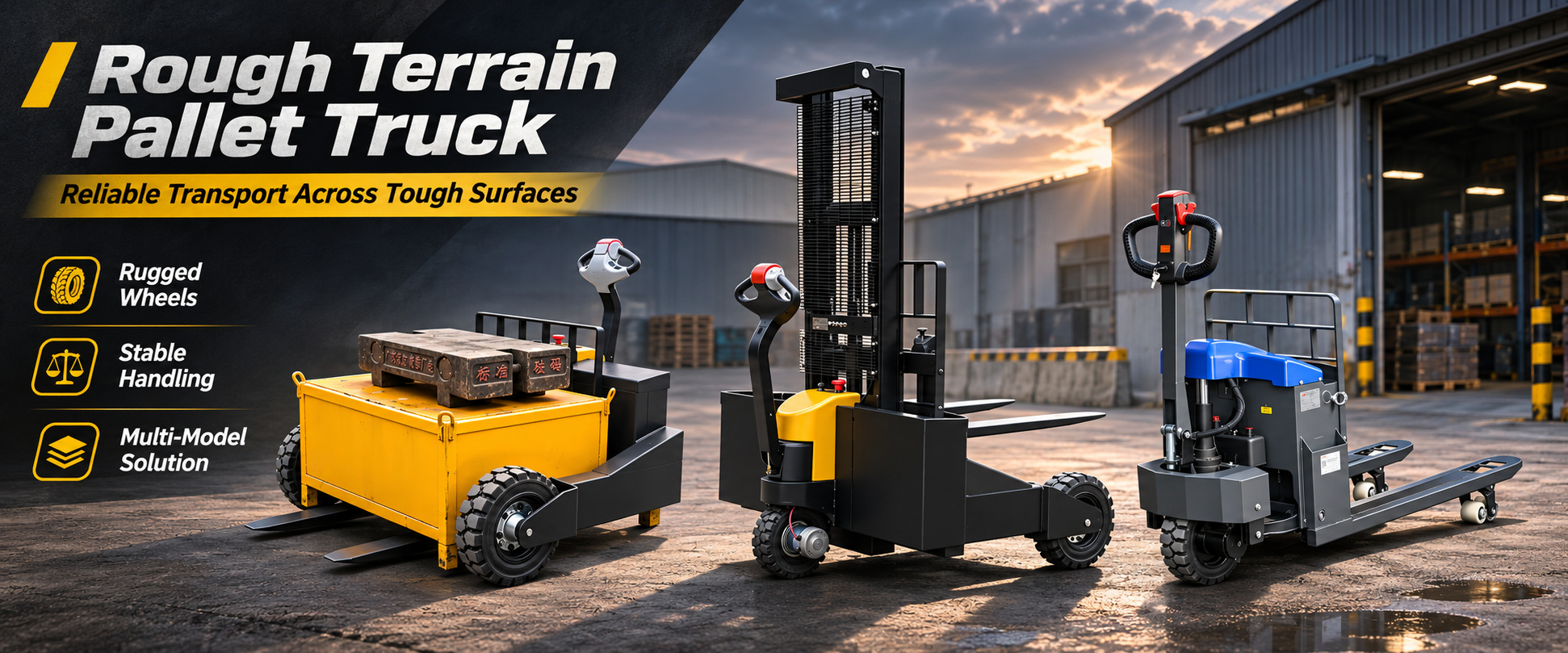
A rough terrain pallet truck can do more than move a pallet—when the load, attachment and host machine are engineered as a compatible system.
For businesses with outdoor yards, uneven paved routes, agricultural facilities or mixed indoor–outdoor workflows, the opportunity is not simply to add another accessory. It is to match one mobile handling platform to several different load types without compromising its rated operating limits.
A pallet requires forks. A steel drum may need a gripper. A film roll needs support that prevents uncontrolled rolling. A waste bin may require a lifting fork or a controlled tipping mechanism. Each task begins with a different load interface, even when the travel route is similar.
SINOLIFT's rough-terrain electric pallet truck range addresses the travel side of the problem. The MAS Series attachment catalogue addresses the load-interface side for suitable MA Series multi-function trucks. Together, these product families provide useful starting points for planning a customized handling solution—but not every MAS attachment is a direct fit for every rough terrain pallet truck.
Why Standard Pallet Trucks Reach Their Limits Outdoors
Conventional warehouse pallet jacks are generally selected for smooth floors and familiar pallet dimensions. Outside the warehouse, a short transport route may include worn concrete, a transition between buildings, an uneven service yard or an occasional shallow surface irregularity. A small load wheel can become the limiting factor before the pallet itself presents a problem.
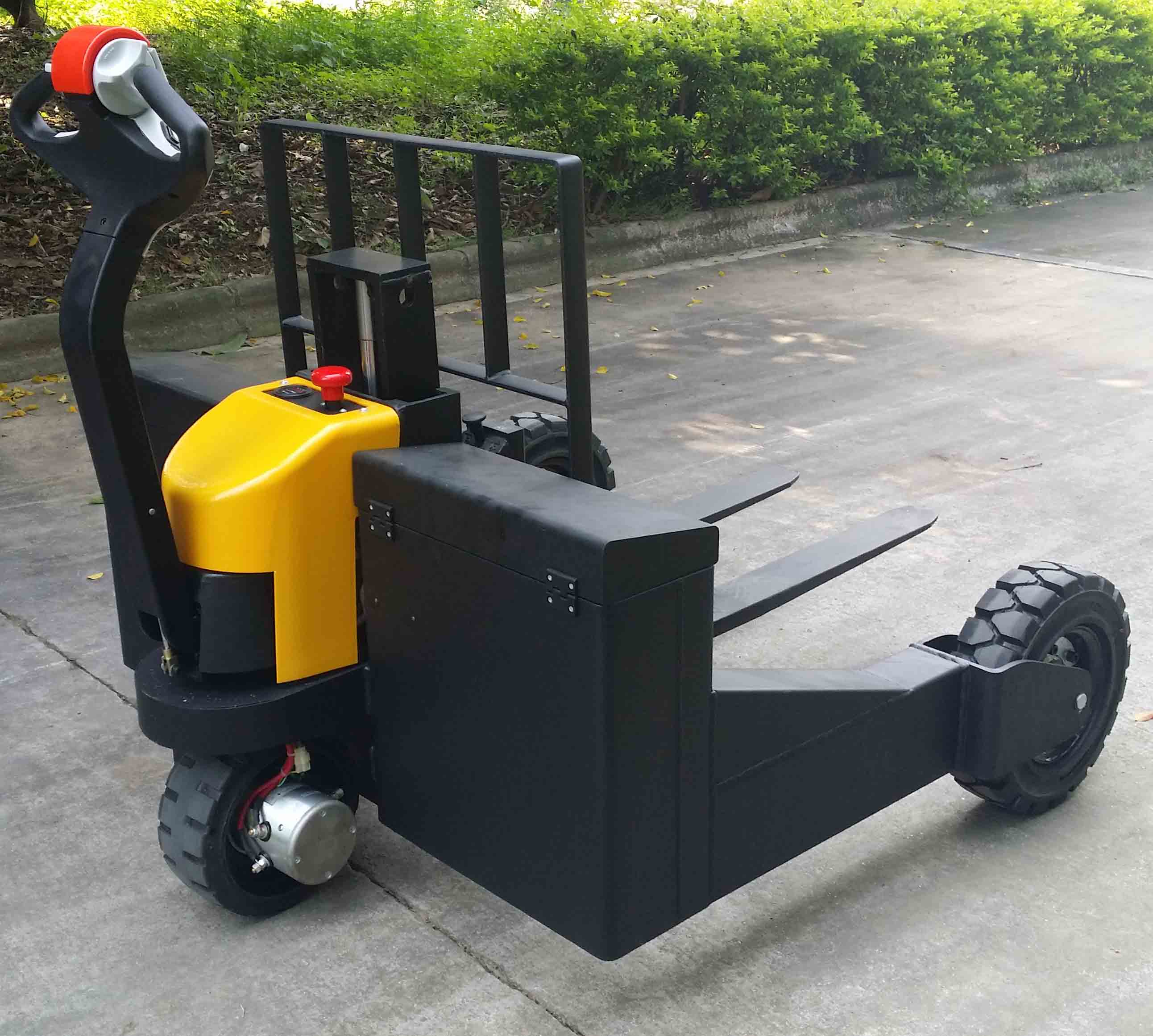
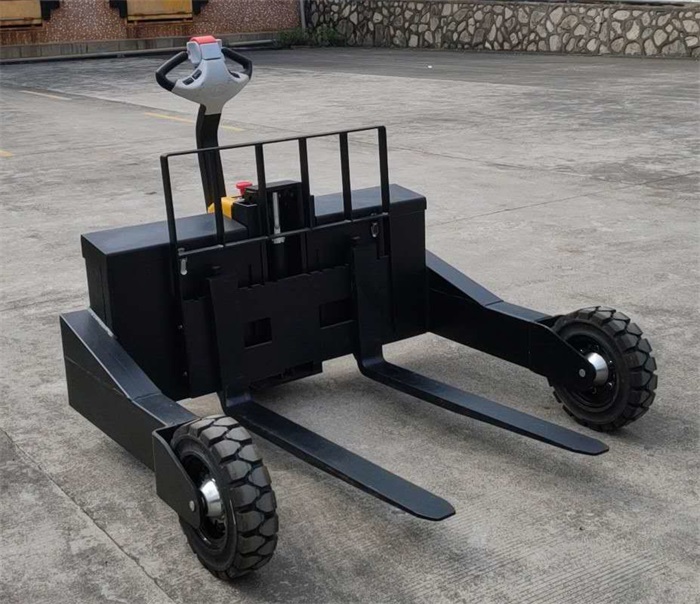
Rough terrain pallet trucks address this challenge with larger wheels, more ground clearance, robust frames and, on electric models, powered travel and lifting. They remain site-specific equipment: firm gravel is different from deep mud, loose sand or a steep ramp. Traction, slope, surface strength, drainage and the operator's sightlines still need to be assessed.
For example, the SINOLIFT WP-100/3.0RTL is a walk-behind electric pallet truck with a rated capacity of 1,000 kg at a 500 mm load center, a 325 mm lifting height and 100 mm ground clearance. The source specification lists 3.5 km/h loaded travel speed, solid-rubber wheels, a 24 V / 70 Ah battery, and electric driving and lifting. These figures describe the base machine, not its permitted capacity with a special attachment.
For larger palletized loads, SINOLIFT also lists WP-150 and WP-200 rough-terrain electric variants. When the job requires lifting substantially higher than pallet-transport height, a suitable rough-terrain stacker, rather than a low-lift pallet truck, may be the correct starting point.
What Changes When You Add a Purpose-Built Attachment?
Think of the truck and the attachment as solving two separate engineering questions:
-
Truck: Can the machine safely travel, steer, brake and lift on this route with the actual load?
-
Attachment: Can it securely engage this shape of load and perform the intended movement—transport, tip, position, rotate or tow?
The SINOLIFT MAS Series includes six documented groups: Drum handler, Wheelie bin handler, Special Roll fork/platform, Fork Attachment, Jib boom/Vacuum, and Tugger hitch & Coupler.
The original MA Series manual describes a standardized multi-function fork carrier and a three-hook locking arrangement for its corresponding attachments. A pallet truck without that verified carrier or an approved adapter must not be treated as automatically compatible.
That distinction matters. Adding an attachment can move the load center forward, change axle loads or introduce a new dynamic force. The correct working capacity may be lower than the rating of either component considered separately.
Seven Real-World Applications Worth Exploring
1. Construction Sites: Beyond the Pallet of Materials
Building sites may have several short transport tasks on the same route: palletized materials near a temporary storage area, boxed fittings beside a maintenance shelter, and irregular equipment that cannot be engaged by normal forks.
A rough terrain electric pallet truck is a practical candidate for low-level pallet transport on a suitably assessed outdoor route. For non-palletized equipment, a purpose-designed platform, retaining arrangement or other engineered interface may be discussed.
The base truck should not be presented as a high-lift crane or forklift simply because a hook appears in concept imagery.
Selection questions: What is the heaviest actual load? Is the route compacted, sloped or frequently wet? Can the attachment keep the load within the stability envelope and preserve visibility?
2. Agricultural Yards and Nurseries: Drums, Supplies and Mixed Loads
Agricultural businesses and garden centers often move both pallets and cylindrical containers around yards, stores and service buildings.
A standard fork arrangement can move compatible pallets; a dedicated drum gripper can be a better load interface for a drum, subject to the host machine and drum geometry.
The MAS catalogue lists the MAS-DLA-1 single-head drum gripper for 55-gallon drums, with a G1 / 250 kg reference rating, and MAS-DLA-1-2 for double-head drum handling, with a G2 / 450 kg reference rating.
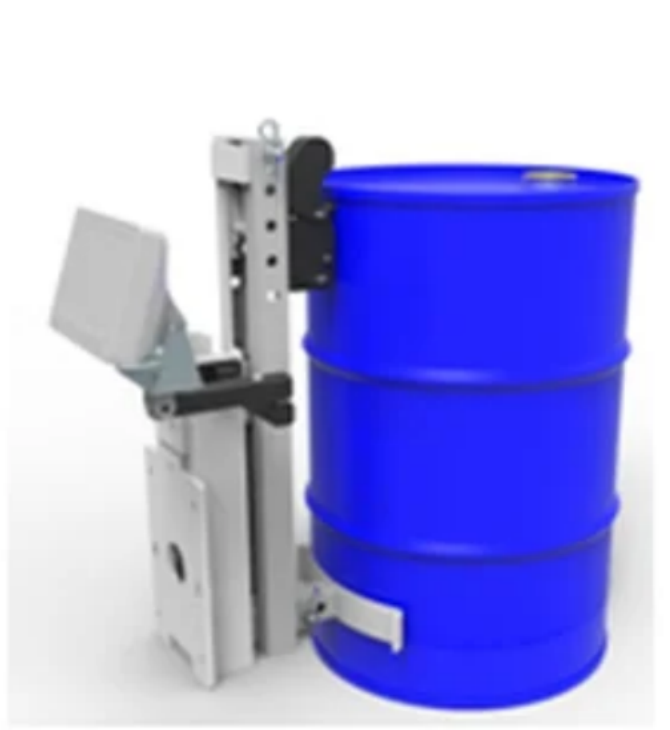
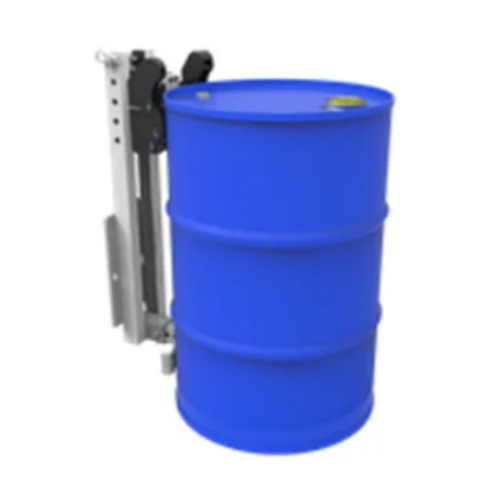
These are attachment specifications, not validated residual capacities on a WP pallet truck. Container style, closure, contents, center of gravity and whether the drum is full all affect the design review.
This workflow can also extend to fertilizer supply areas, equipment-maintenance stores and seasonal distribution yards where several load types share an outdoor route.
3. Packaging and Printing: Film Rolls and Paper Reels
A reel or roll creates a different challenge from a rectangular pallet. The load may shift if it is supported poorly, while its outer diameter and core size determine how it should be engaged.
The MAS attachment range includes a MAF-RF-50 single roll fork listed for a 500 kg load and 3-inch core, plus MAF-DF-D2 roll forks for 500 kg / 350 mm roll diameter and MAF-DF-D3 for 750 kg / 450 mm roll diameter.
There is also a MAS-PRF01 manual expanding mandrel with a 75 mm core-diameter reference.
Potential applications include film handling, paper converting and roll storage between production and dispatch zones.
However, roll mass, core strength, roll diameter, orientation and travel vibration must all be considered. The listed attachments are not proof that a given rough-terrain pallet truck can carry or manipulate those rolls.
4. Parks, Campuses and Municipal Service Areas: Wheelie Bins
Outdoor service teams may need to move wheeled bins between collection points and transfer areas. Where repeated manual movement is awkward, lifting or rotating mechanisms may be worth evaluating.
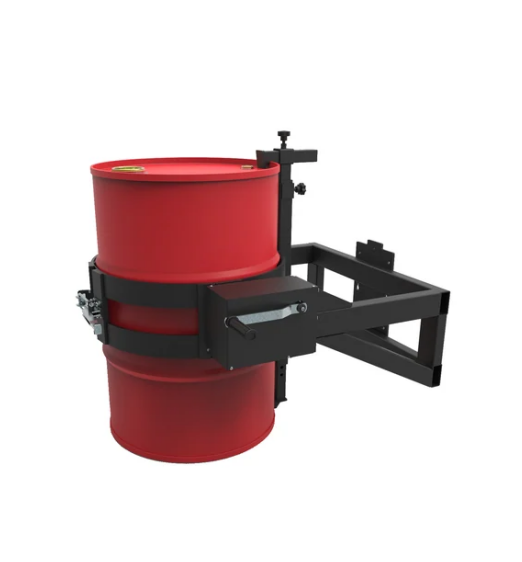
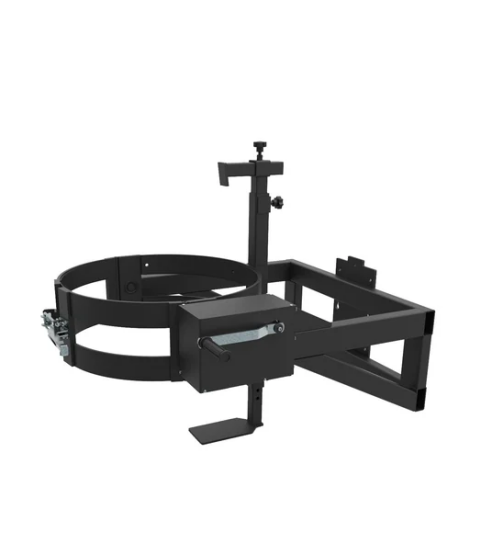
The MAS list includes the MAS-WBL-36 wheelie-bin lift fork for 240 L bins, the MAS-LRM-WB36 240 L wheelie-bin rotator with manual rotation and an optional DC-powered arrangement, and the MAS-LRE-WB66 for 660 L bins with DC-powered rotation and a manual option.
The catalogue also depicts a stack-lift arrangement for one 660 L bin or two 240 L bins, but its model identifier is not specified in the source.
Bin capacity in liters is volume, not lifting capacity in kilograms. Confirm the full bin mass, center of gravity, bin geometry and controlled discharge requirements before choosing a machine.
5. Factory Yards: Towing Service Carts and Trailers
Not every load needs to be lifted. Moving a small wheeled cart from an outdoor staging area to a work point may call for a towing configuration rather than a fork attachment.
The MAS range lists pin hitches, ball-hitch couplers, wheelie-bin locking hitches and manual-lock hitch arrangements. These references illustrate the variety of connection styles that can be specified for suitable multi-function trucks.
A hitch is not, by itself, approval to tow.
Permissible drawbar pull, trailer mass, braking, coupling height, steering clearance, turning radius and slope must be assessed for the particular host vehicle. This is especially important when towing multiple carts or operating around pedestrians.
6. Maintenance Workshops: Gas Cylinders and Special Containers
Maintenance facilities may handle gas bottles, stainless-steel drums or special containers that do not sit securely on standard pallet forks.
The MAS catalogue includes MAS-LTL-35, a reference gas-bottle gripper in its G1 / 250 kg group, and MAS-KEG-KT, a stainless-steel drum gripper also listed at G1 / 250 kg.
The attachment concept is useful, but securing a compressed-gas cylinder involves more than load weight: the cylinder must remain properly restrained and be handled according to applicable site procedures.
Do not assume an attachment can tilt or transport every container type without engineering approval.


7. Specialized Lifting: Know When to Choose a Stacker Instead
Jib booms, overhead clamps and vacuum lifters open up further applications—for example, handling suitable panels, steel plates or other non-palletized objects.
SINOLIFT's catalogue includes MAS-JBE-G1 fixed jib boom variants and MAS-GR-420M, a vacuum-lift reference with 150 kg load capacity, electrically controlled tilt and manually operated rotation features.
These are not general-purpose accessories for a low-lift pallet truck.
A suspended or elevated load creates different requirements for mast geometry, lifting height, stability, load chart, guarding and controls.
For this kind of task, start the discussion with an appropriate lift truck or rough-terrain stacker, such as the WS-150 family, and request a machine-and-attachment assessment before specifying equipment.
Quick Selection Guide: Match the Task Before Choosing the Accessory
| Handling task | Attachment or equipment starting point | Essential check |
|---|---|---|
| Pallets across a mixed indoor–outdoor route | Rough terrain electric pallet truck with suitable forks | Route, pallet geometry, grade and rated capacity |
| 55-gallon drum movement | MAS drum-gripper family as a reference | Drum profile, attachment interface and residual capacity |
| Film or paper rolls | Roll forks, mandrel or roll-support platform | Core/diameter, orientation and load restraint |
| 240 L / 660 L waste bins | Bin lift fork or controlled bin rotator | Full bin weight, bin engagement and discharge control |
| Yard carts or light trailers | Engineered towing hitch/coupler arrangement | Approved towing limits, brakes and coupling geometry |
| Elevated panels or suspended loads | Suitable stacker plus engineered jib/vacuum system | Stability, mast/load chart and power/control integration |
Do not select an attachment from its catalogue rating alone. Ask SINOLIFT to confirm the approved combination and its operating capacity for the exact truck, load and site conditions.
Five Questions to Resolve Before Ordering
1. Which truck and carriage are you using?
Provide the exact model and photos/drawings of the fork carrier or mounting structure. The MA Series standardized carrier described in the MAS manual is a defined system; it is not a universal fitment standard for all WP models.
2. What is the real load?
Share the maximum mass, dimensions, center of gravity, contact points and whether the load can shift or spill. For rolls, specify outer diameter and core. For drums, specify material and drum type. For bins, give loaded weight rather than nominal liters alone.
3. Where will the truck travel?
Identify indoor/outdoor transitions, narrow aisles, drainage channels, bumps, gradients and surface conditions. A machine suitable for firm gravel may be unsuitable for deep mud or an unassessed slope.
4. What motion is required?
Separate transporting, low-level lifting, elevated stacking, rotating, tipping and towing. Some tasks require an entirely different host truck, hydraulic circuit, electrical supply or control arrangement.
5. What must be verified before release?
Request the complete machine-plus-attachment working-capacity confirmation, mounting details, travel/operating restrictions and any site-specific safety requirements.
Frequently Asked Questions
Can every MAS attachment be fitted to a SINOLIFT WP rough terrain pallet truck?
No universal compatibility is established in the source information. The MAS manual defines a standardized MA Series multi-function fork-carrier system. Fitting an attachment to a WP model requires separate confirmation of the mounting arrangement, capacity and controls.
Can a rough terrain pallet truck handle both pallets and drums?
A WP truck can handle compatible pallets within its specified limits. Drum handling is a possible customized application only when a suitable gripper or adapter and its machine-specific rating have been approved.
Is a rough terrain pallet truck suitable for outdoor gravel, grass or muddy ground?
Suitability depends on the specific truck, surface firmness, wheel traction, grade and load. “Rough terrain” does not mean unrestricted off-road travel, and loose or wet ground requires particular attention.
Do I need a rough terrain stacker instead of a pallet truck?
Choose a stacker when the required lifting height, load positioning or specialized elevated attachment exceeds low-lift pallet-truck capabilities. Confirm the stacker's remaining capacity at the working height with the intended attachment.
What should I send for a customized attachment quotation?
Send the truck model, load weight and dimensions, photos of the load and handling point, travel-surface details, required movement, anticipated operating frequency and any preferred attachment reference from the MAS catalogue.
Plan the Whole Handling System, Not Just the Attachment
The most useful question is not “How many accessories can this truck carry?” It is “How many different handling jobs can we perform safely with the right truck, interface and operating method?”
For suitable outdoor routes, a rough terrain electric pallet truck can form the basis of efficient low-level load transportation. Purpose-built interfaces may extend the work to special containers, rolls or trailers when engineered and approved for that model.
Elevated or suspended-load tasks may call for a different, mast-equipped machine entirely.
Explore the SINOLIFT Rough Terrain Electric Pallet Truck range, review the MAS Series Attachments & Options catalogue, or see an example WP-200-3.0RTL electric pallet truck and WS-150 rough terrain electric stacker.
Have a mixed-load handling challenge? Email info@sinolift.net or contact SINOLIFT via WhatsApp +86 138 1717 8390.
Include the load and site details so the team can review a practical configuration rather than assume a catalogue attachment is a direct fit.